James Clear’s bibliography is short enough to make the reading order simple, but current search results can blur several different kinds of products. As of August 20, 2026, Clear has two conventionally published, authored book-length titles in the official publisher record: Atomic Habits and The Atomic Habits Workbook. The second is an official companion workbook, not a new narrative sequel. The Clear Habit Journal is a designed notebook and habit tracker created with Baronfig, not a third authored trade book.
Most readers should begin with Atomic Habits. It presents the concepts and vocabulary that the workbook asks readers to apply. If you already own the book and want a structured implementation cycle, continue to the workbook. For a chapter-based plan focused only on the original book, use Readever’s Atomic Habits reading guide.
James Clear’s Authored Books in Publication Order
This list uses each work’s first publication date in the current Penguin Random House record. It treats the workbook as an authored book-length publication while clearly labeling its format.
1. Atomic Habits (2018)
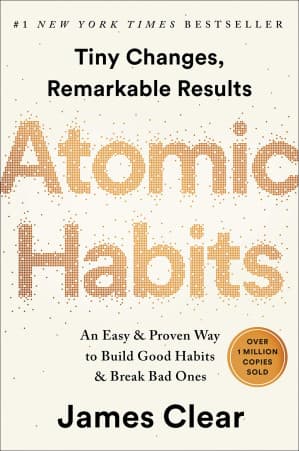
Atomic Habits: An Easy & Proven Way to Build Good Habits & Break Bad Ones is Clear’s foundational trade book. It organizes behavior change around small repeated actions, systems, identity, environmental cues, friction, and feedback. Its best-known structure is the Four Laws of Behavior Change: make a desired habit obvious, attractive, easy, and satisfying, with inverse questions for reducing an unwanted behavior.
The book is designed to explain a framework, not merely provide blank exercises. Readers encounter concepts, examples, and practical prompts that can be adapted to work, study, health, creativity, or household routines. That breadth is why it remains the natural starting point even for someone who eventually wants the workbook.
Treat the framework as a set of design questions rather than a guarantee. Behavior also depends on health, resources, social conditions, competing responsibilities, and the nature of the goal. A small environmental change can be useful without being sufficient for every problem.
2. The Atomic Habits Workbook (2025)
The Atomic Habits Workbook: The Official Companion to the #1 Worldwide Bestseller was published on December 9, 2025. Penguin Random House identifies James Clear as the author and describes it as the official companion to Atomic Habits. It is a 320-page guided workbook with exercises intended to help readers examine habits and apply the original framework.
The format distinction matters. This is an authored book-length publication, but it is not a second general-audience argument about habit science and it should not be described as Atomic Habits 2. Readers will get more from it if they already understand the original book’s major concepts or are rereading the relevant sections alongside the exercises.
Choose the workbook when you need prompts, space to write, and a more deliberate review process. Skip or postpone it if you have not yet read the original, dislike guided exercises, or already maintain a habit-review system that works for you.
Where The Clear Habit Journal Fits
The Clear Habit Journal belongs in a separate product category. Clear’s first-party page describes it as a combination daily journal, dot-grid notebook, and habit tracker created in partnership with Baronfig. It includes tracking and note-taking structures, but it is a physical productivity tool rather than a conventional authored book or the official workbook published by Avery.
That means a clean bibliography should not place it beside the two authored titles without a label. A useful classification is:
- Authored trade book: Atomic Habits.
- Authored official companion workbook: The Atomic Habits Workbook.
- Collaboratively designed journal/product: The Clear Habit Journal.
- Other resources: articles, newsletters, email courses, summaries, talks, and downloadable worksheets; useful in their own formats, but not additional books in this chronology.
No separately published coauthored book or edited collection was identified in the first-party author and publisher records reviewed for this August 20, 2026 cutoff. That is a bounded finding, not a permanent claim; a future announcement or catalog update would require a refresh.
Retail listings can also include translations, special editions, boxed formats, large-print editions, audio editions, calendars, unofficial summaries, and third-party workbooks. A new ISBN or format does not automatically mean Clear wrote a new book. Check the named author, publisher, responsibility statement, and original publication date before adding an item to the bibliography.
Which James Clear Book Should You Read First?
Start with Atomic Habits if you are new to Clear’s work. It supplies the conceptual map and gives you enough context to decide which ideas are relevant. Read with one specific behavior in mind rather than trying to redesign every routine at once.
Continue with The Atomic Habits Workbook if you want structured practice. Use it slowly: complete an exercise, test one change in a real setting, record what happened, and revise. Filling every page rapidly may feel productive while producing little evidence about which change actually helped.
Use The Clear Habit Journal if your need is ongoing capture or tracking rather than explanation. A journal can make repetitions visible, but tracking is not the same as progress. Select measures that reflect the behavior you care about, and stop using any tracker that becomes more burdensome than the activity itself.
Readers looking beyond habits can browse Readever’s productivity collection and personal development collection. Those category pages widen the reading path; they do not change the bounded James Clear bibliography above.
A Practical Reading and Application Order
For a first pass, use this sequence:
- Read Atomic Habits once for structure. Identify the system, identity, cue, friction, and feedback ideas most relevant to one behavior.
- Run a small experiment. Change one variable for a defined period instead of adopting several tactics at once.
- Review the evidence. Record starts, misses, context, and unexpected constraints. Avoid treating a short streak as proof of permanent change.
- Use the workbook selectively. Complete the exercises connected to the weakest part of your current system.
- Add a journal only if it reduces confusion. The tool should clarify the next action or review, not create another routine to maintain.
This order separates learning from implementation. It also keeps product ownership from becoming the goal. You do not need every format to test a useful idea, and buying a workbook or journal does not itself create a habit.
How to Read the Bibliography Critically
Author guides often become inaccurate in predictable ways. Use four checks whenever this page is refreshed.
First, distinguish publication from format. Print, ebook, audio, translated, anniversary, and special editions may be separate products but the same underlying work.
Second, distinguish authorship from collaboration. Clear is the named author of the official workbook. The habit journal is described as created in partnership with Baronfig. Those responsibility statements should remain visible.
Third, distinguish a sequel from a companion. The workbook applies an existing framework. Calling it a sequel could make readers expect a separate argument or a new conceptual system.
Fourth, check the date. This guide is accurate to August 20, 2026, not permanently complete. Before publication or a later refresh, review Clear’s official pages and publisher catalog for newly announced or newly published work.
When taking notes, label each item concept, exercise, observation, or result. A concept comes from the reading; an exercise asks you to act; an observation records what happened; and a result requires enough evidence to support a conclusion. Keeping these categories separate reduces the risk of mistaking an appealing idea for a demonstrated outcome.
James Clear Books FAQ
How many books has James Clear written?
As of August 20, 2026, this bounded guide identifies two authored book-length publications in the official publisher record: Atomic Habits and The Atomic Habits Workbook. The second is an official companion workbook. Editions, translations, journals, newsletters, and third-party derivative products should not be counted as additional authored books without checking their responsibility statements.
What order should I read James Clear’s books in?
Read Atomic Habits first, then use The Atomic Habits Workbook if you want guided exercises. The workbook assumes the original framework and is more useful as an application tool than as a substitute for the main book.
Is The Atomic Habits Workbook written by James Clear?
Yes. Penguin Random House lists James Clear as the author and identifies it as the official companion workbook. It was published on December 9, 2025.
Is The Atomic Habits Workbook a sequel?
No. It is better described as a guided companion to Atomic Habits. It turns the original framework into exercises and written reflection rather than presenting itself as a second narrative book with a separate thesis.
Is The Clear Habit Journal a James Clear book?
It is a James Clear–branded journal created with Baronfig, but it is not a conventional authored trade book. Classify it as a journal, notebook, habit tracker, or derivative productivity product, not as a third narrative title.
Can I start with the workbook instead of Atomic Habits?
You can, but most first-time readers will have more context if they read Atomic Habits first or consult the relevant chapter while completing an exercise. The workbook is designed for application, not as a full replacement for the original explanation.
Start with the Framework, Then Choose the Tool
For most readers, the answer is straightforward: read Atomic Habits, test one idea, and add the official workbook only when structured practice would help. Keep the journal in a separate product category and verify future titles against first-party author and publisher records.
To keep books, notes, and follow-up questions in one reading workspace, open Readever.