🎯 Want to master Web3 and cryptocurrency with AI-powered guidance?
Read Web3 & Crypto Books FREE at www.readever.app - Access these essential Web3 and crypto books with advanced AI reading companions that help you understand complex concepts, provide real-time explanations, and make your learning journey more engaging and effective!
Why Web3 Needs a 2025 Reading Plan
2025 finally turned Web3 from speculative hype into regulated infrastructure: the SEC approved spot Ethereum ETFs, the EU’s MiCA framework entered enforcement, and Fortune 500 supply chains now pilot tokenized invoices. That velocity creates FOMO and noise, so we borrowed the same scaffolding we used for our 2025 Nobel Prize reading plan—anchor the reading journey in a sequenced canon, then layer AI-assisted practice.
- Regulation is real: ETFs, MiCA, and India’s RBI sandbox all demand policy fluency, not just meme-coin trivia.
- Enterprise pilots have budgets: From Walmart’s provenance tracking to JPMorgan’s Onyx network, stakeholders expect you to translate blockchain outcomes into KPIs.
- DeFi keeps iterating: Restaking, intent-based architectures, and MEV markets reinvent incentives quarterly; you need durable mental models to keep up.
Web3 skills ladder (beginner -> strategist -> builder)
- Beginner (conceptual literacy): The Basics of Bitcoins and Blockchains and The Age of Cryptocurrency teach why decentralized money exists at all.
- Strategist (systems thinking): Blockchain Basics, Cryptoassets, and Blockchain Revolution map business cases, valuation frameworks, and governance.
- Builder (hands-on execution): Mastering Bitcoin, Mastering Blockchain, The Infinite Machine, and How to DeFi turn that theory into code, smart-contract design, and on-chain operations.
Pair this ladder with the retention tactics inside How to Read Smarter with AI so annotations, highlights, and spaced-repetition prompts keep pace with your crypto experiments.
The Essential Web3 Canon: A Curated Guide to Foundational Literature
The decentralized revolution is transforming everything from money to governance, but navigating the complex world of Web3, cryptocurrency, and blockchain technology can feel overwhelming. Whether you're a complete beginner or a seasoned professional, these essential books will provide the knowledge foundation you need to understand and participate in this paradigm shift.
Just as we did with the Nobel Prize reading order, this list distills dozens of primary sources, conference syllabi, and protocol documentation into a single learning arc. Each pick covers a distinct pillar of the Web3 ecosystem—from the philosophical foundations of decentralization to practical guides for DeFi investing—so you can build literacy without getting trapped in overlapping primers.
Best Web3 Books for Beginners: Your Gateway to Understanding Web3
The Basics of Bitcoins and Blockchains: An Introduction to Cryptocurrencies and the Technology that Powers Them by Antony Lewis
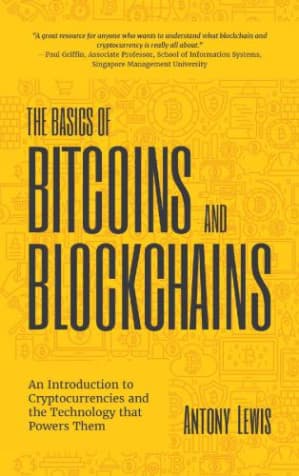
Consistently cited as the ideal entry point for absolute beginners, this book serves as a comprehensive primer for the entire ecosystem. Antony Lewis excels at demystifying the essential elements of cryptocurrencies and their underlying infrastructure without overwhelming the reader. The text begins by tracing the history of money and explaining how the traditional banking system works, providing crucial context for why decentralized alternatives have value.
What makes this book exceptional is its methodical approach: Lewis starts with fundamental concepts and gradually builds up to more complex topics, making it accessible to readers with no prior technical background. You'll understand not just what Bitcoin is, but why it matters in the broader context of financial evolution.
Blockchain Basics: A Non-Technical Introduction in 25 Steps by Daniel Drescher
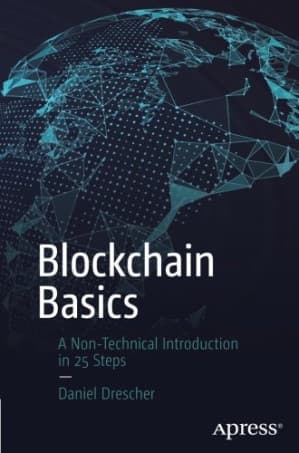
Authored by a seasoned banking professional, this book is explicitly designed for a business-oriented audience that needs to grasp the strategic implications of blockchain without getting lost in technical minutiae. Drescher methodically demystifies the technology in 25 clear, concise steps, deliberately avoiding mathematical formulas, programming code, and computer science jargon.
This structured approach makes the complex subject matter highly digestible. The book bridges the gap between purely technical explanations and business applications, making it perfect for executives, investors, and professionals who need to understand blockchain's disruptive potential without becoming developers themselves.
The Age of Cryptocurrency: How Bitcoin and Digital Money Are Challenging the Global Economic Order by Paul Vigna and Michael J. Casey
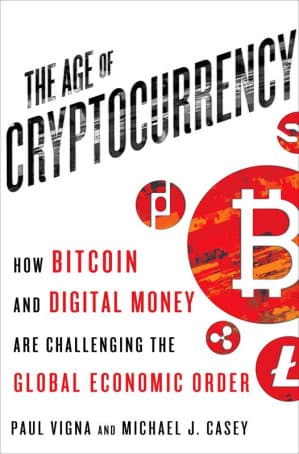
Written by two Wall Street Journal financial writers, this book excels at placing cryptocurrency within the broader global economic and political context. Vigna and Casey argue that Bitcoin is not merely a technological curiosity but a monumental paradigm shift with the potential to transform the social and economic landscape.
The book demystifies virtual currency by explaining its origins and functions, but its primary contribution is its analysis of the technology's macro implications. It positions cryptocurrencies as part of a larger historical evolution of money and challenges readers to think critically about the future of finance, governance, and social organization in a decentralized world.
The Ethereum Revolution: Understanding Smart Contracts and Web3
The Infinite Machine: How an Army of Crypto-hackers Is Building the Next Internet with Ethereum by Camila Russo
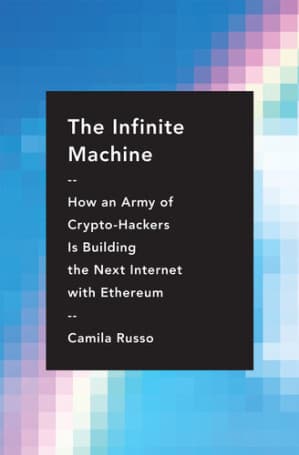
If Digital Gold is the story of Bitcoin, The Infinite Machine is the quintessential account of Ethereum's creation. Authored by former Bloomberg journalist Camila Russo, the book is often compared to narrative nonfiction classics like The Big Short for its verve and dramatic storytelling. It details the remarkable story of Vitalik Buterin, a 19-year-old programming prodigy who envisioned a "world computer" capable of far more than Bitcoin's peer-to-peer payments.
Russo chronicles Ethereum's chaotic development, internal conflicts, and ultimate triumph with the precision of an investigative journalist and the narrative flair of a novelist. This book is essential for understanding how Ethereum expanded blockchain's capabilities beyond simple payments to enable smart contracts, decentralized applications, and the entire Web3 ecosystem.
Blockchain Books for Developers: Technical Mastery and Deep Dives
Mastering Bitcoin: Unlocking Digital Cryptocurrencies by Andreas M. Antonopoulos
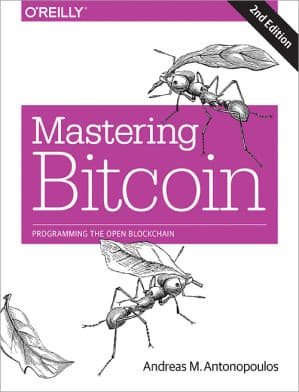
Universally acclaimed as the definitive technical guide to Bitcoin, this book is essential reading for any developer, engineer, or systems architect working with the protocol. Antonopoulos provides a comprehensive and meticulous explanation of Bitcoin's technical foundations. The book begins with cryptography basics, such as public and private keys and addresses, before moving to the data structures, peer-to-peer network architecture, transaction lifecycle, and the consensus mechanism known as proof-of-work.
What sets this book apart is its balance of theoretical depth and practical application. Antonopoulos doesn't just explain how Bitcoin works; he shows you how to build with it, including code examples and implementation details that make it a valuable reference for hands-on development.
Mastering Blockchain, Fourth Edition by Imran Bashir
This book serves as a comprehensive, encyclopedic reference that extends beyond Bitcoin and Ethereum to cover the entire blockchain ecosystem. Bashir's work is designed for both beginners and seasoned professionals, starting with the fundamentals of distributed systems and cryptography before delving into more complex topics. Its unique value lies in its breadth, offering detailed explorations of enterprise blockchain platforms like Hyperledger Fabric and Corda alongside public networks.
The fourth edition is particularly valuable for its coverage of emerging trends like decentralized finance (DeFi), non-fungible tokens (NFTs), and the broader Web3 landscape. Whether you're interested in technical implementation or strategic planning, this book provides the foundation you need.
Investment and Trading Crypto Books: Navigating the Markets
Cryptoassets: The Innovative Investor's Guide to Bitcoin and Beyond by Chris Burniske and Jack Tatar
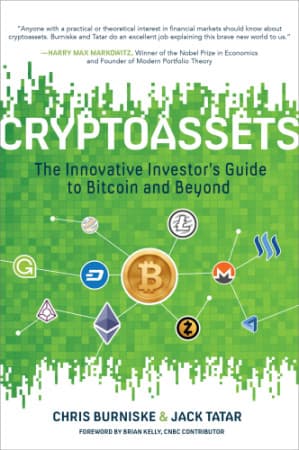
This is the foundational text for treating cryptocurrencies as a serious, investable new asset class. Burniske and Tatar provide a clear, concise, and actionable framework for investigating, valuing, and managing a portfolio of cryptoassets. They introduce a clear taxonomy to help investors categorize the burgeoning landscape, distinguishing between cryptocurrencies, cryptocommodities, and cryptotokens.
The book offers practical guidance on navigating the market's notorious volatility, including portfolio construction strategies, risk management techniques, and methods for fundamental analysis. What makes it particularly valuable is its disciplined approach to valuation—a rarity in the often-speculative crypto space—providing investors with tools to make rational decisions amid market euphoria and panic.
The DeFi Revolution: Understanding Decentralized Finance
Decentralized Finance (DeFi) represents the expansion of blockchain's financial applications from simple peer-to-peer money to a full-stack, open-source, and permissionless alternative to traditional banking and finance.
How to DeFi (Beginner & Advanced) by CoinGecko, Darren Lau, et al.
This series, produced by the team at data aggregator CoinGecko, stands as the quintessential practical guide to the world of DeFi. The Beginner volume offers a comprehensive introduction to the core concepts, contrasting DeFi with traditional finance and providing clear, step-by-step instructions for using key DeFi primitives like decentralized exchanges (DEXs), lending and borrowing protocols, and stablecoins. The Advanced volume builds upon this foundation, exploring more complex and emergent areas of the DeFi ecosystem.
What makes these books exceptional is their practical, hands-on approach. Rather than abstract explanations, they provide concrete tutorials, security best practices, and real-world examples that help readers safely navigate the DeFi landscape. The authors' deep involvement in the crypto space ensures the content is current and reflects the latest developments in this rapidly evolving field.
Business Applications and Strategic Implications
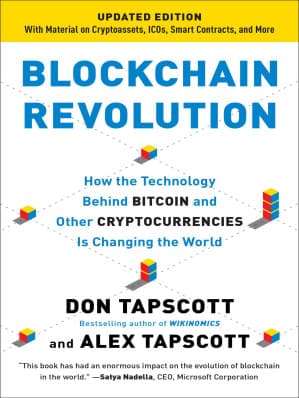
Blockchain Revolution: How the Technology Behind Bitcoin Is Changing Money, Business, and the World by Don Tapscott and Alex Tapscott

This is the foundational text for business leaders, executives, and policymakers seeking to understand the strategic implications of blockchain. The Tapscotts provide a brilliantly researched, highly readable, and optimistic overview of how blockchain technology has the potential to transform industries far beyond finance, including healthcare, supply chain management, intellectual property, and even democratic governance.
Endorsed by leaders from the World Economic Forum and major corporations, this book excels at connecting technical capabilities to real-world business applications. It helps readers understand not just how blockchain works, but how it can be applied to solve specific business problems and create new value propositions across virtually every industry.
The Truth Machine: The Blockchain and the Future of Everything by Michael J. Casey and Paul Vigna
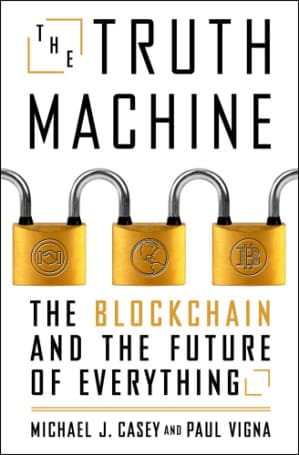
Building on their earlier work on Bitcoin, Casey and Vigna expand their focus to examine blockchain's broader implications for trust, verification, and economic organization. The book explores how blockchain's ability to create immutable, transparent records could revolutionize everything from supply chain management to voting systems to intellectual property protection.
What distinguishes this book is its nuanced examination of blockchain's limitations and challenges alongside its potential. The authors avoid the hyperbolic claims that sometimes characterize blockchain discussions, instead providing a sober, well-researched analysis of when blockchain makes sense and when it doesn't.
🎯 Ready to dive deeper into Web3 and cryptocurrency?
Get Your AI Reading Companion for Web3 Books at www.readever.app - Enhance your Web3 learning journey with AI-powered annotations, explanations, and interactive discussions that make complex blockchain concepts crystal clear!
Web3 Reading Order: Choose Your Entry Point
With so many excellent crypto books available, it's crucial to choose the right starting point based on your background and goals. Use this reading order to stay focused:
For Complete Beginners
- The Basics of Bitcoins and Blockchains — build vocabulary around wallets, consensus, and monetary history without touching code.
- The Age of Cryptocurrency — zoom out to the geopolitical stakes so you can explain Web3 to executives, family members, or policy makers.
For Business Strategists
- Blockchain Basics — translate technical jargon into stakeholder-ready talking points.
- Blockchain Revolution — connect those concepts to supply chain, identity, and finance KPIs so you can scope real pilots.
For Developers and Engineers
- Mastering Bitcoin — learn how transactions propagate, how keys are generated, and how to run secure nodes.
- Mastering Blockchain — expand into consensus variations, token standards, and zero-knowledge modules.
- The Infinite Machine — internalize Ethereum’s culture of shipping in public so you can design resilient teams.
For Investors and DeFi Power Users
- Cryptoassets — adopt a fundamentals-based valuation model before allocating capital.
- How to DeFi — practice swapping, lending, and staking across protocols while tracking smart-contract risk.
Keep Your Web3 Study Loop Alive
- Run dual-mode sprints: Use the planning prompts from Planning vs. Execution: The Two-Mode Framework to alternate between research days (reading, annotating) and build days (deploying contracts, back-testing DeFi strategies).
- Level up comprehension: Apply the layered note-taking system from How to Read Smarter with AI so every highlight becomes a prompt, flashcard, or code snippet you can reuse.
- Track mastery checkpoints: Borrow the diagnostic tiers from Five Levels of Reading Comprehension to gauge whether you merely recall crypto jargon or can synthesize across Bitcoin, Ethereum, and enterprise chains.
The Future of Web3 Reading: Beyond Static Pages
The world of Web3 and cryptocurrency evolves at lightning speed, with new developments, protocols, and opportunities emerging daily. While these books provide essential foundations, the most effective learning approach combines deep reading with ongoing engagement with current developments.
This is where AI-powered reading companions like Readever are revolutionizing how we learn about complex technologies. Rather than passively absorbing information, you can engage in dynamic conversations with AI that helps clarify concepts, provide real-world examples, and connect ideas across different books and sources. Imagine reading about smart contracts and being able to ask immediate questions about implementation details, or exploring DeFi protocols with an AI that can explain complex financial mechanisms in simple terms.
The future of learning about Web3 isn't just about reading—it's about engaging, questioning, and applying knowledge in interactive ways that accelerate understanding and retention. Whether you're a developer building the next generation of decentralized applications, an investor navigating the complex crypto landscape, or simply someone curious about the future of money and governance, these essential books provide the foundation you need to participate in the decentralized revolution.
Frequently Asked Questions About Web3 and Crypto Books
What are the best books to learn about Web3?
The best Web3 books for beginners start with "The Basics of Bitcoins and Blockchains" by Antony Lewis, followed by "The Age of Cryptocurrency" by Vigna and Casey for broader context. For technical depth, "Mastering Bitcoin" by Andreas Antonopoulos is essential.
How many Web3 books should a beginner read?
Start with 2-3 foundational books: one beginner guide, one context-setting book, and one technical overview. This provides a solid foundation before diving into specialized areas like DeFi or smart contracts.
Which books should I read to understand cryptocurrency?
For understanding cryptocurrency, we recommend: "The Basics of Bitcoins and Blockchains" (foundations), "The Age of Cryptocurrency" (context), and "Cryptoassets" by Burniske and Tatar (investment perspective).
What's the best order to read blockchain books?
The optimal learning path is: 1) Basic concepts, 2) Historical context, 3) Technical foundations, 4) Investment strategies, 5) Advanced topics like DeFi and Ethereum.
Can I learn Web3 without technical background?
Yes! Books like "Blockchain Basics" by Daniel Drescher and "The Age of Cryptocurrency" are designed for non-technical readers, explaining concepts without complex jargon or code.
Are these crypto books still relevant in 2025?
Yes, all books featured are either recent editions or timeless classics that provide fundamental knowledge applicable to current Web3 developments. The core principles remain consistent even as technology evolves.
🎯 Transform your Web3 learning experience today!
Start Reading Essential Crypto Books with AI Guidance at www.readever.app - Join thousands of readers who are using AI to master complex Web3 concepts, engage with crypto books more deeply, and accelerate their understanding of the decentralized future!
Start Mastering Web3 Today: Your Complete Action Plan
🎯 Ready to turn this reading list into usable skill?
- Queue the bundle in Readever: Launch the Web3 starter bundle above so every title— from The Basics of Bitcoins and Blockchains to How to DeFi—lives in one synced library with AI chat on tap.
- Build comprehension loops: After each chapter, let Readever auto-generate quizzes and summary cards, then push the insights into the workflows from How to Read Smarter with AI.
- Ship something tangible: Use Mastering Bitcoin or Mastering Blockchain as technical references while you deploy a testnet contract, design a token model, or automate a DeFi ladder.
- Review quarterly: Revisit the action checklists inside Planning vs. Execution every quarter to decide whether you should double down on infrastructure, investing, or governance.
The payoff: you’ll own a durable 2025-ready crypto literacy stack that keeps pace with regulation, strategy, and code instead of chasing headlines.
Keywords: Web3 beginner books 2025, crypto reading plan, blockchain study guide, Ethereum ETF education, DeFi books for investors, AI reading companion, Readever Web3 bundle, crypto learning path