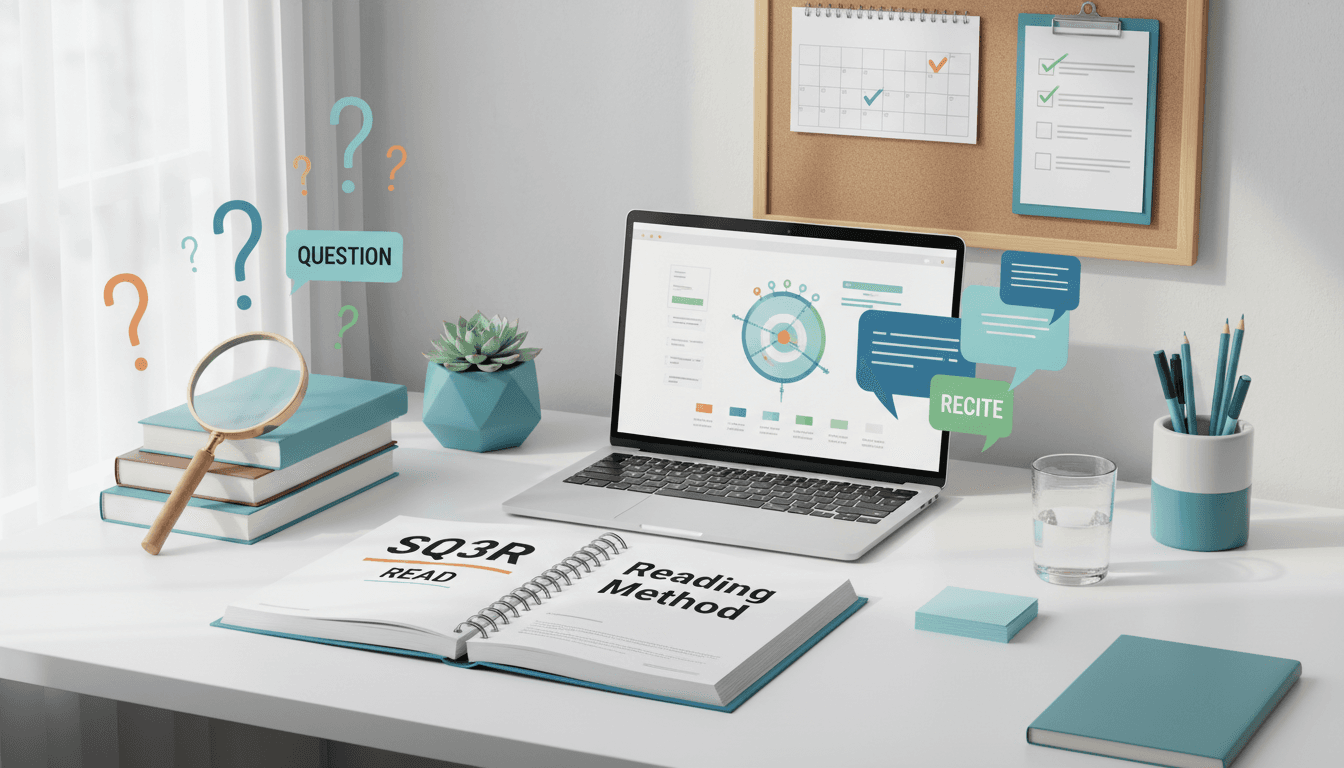
Most people think they’re reading when their eyes move across the page, but comprehension is not automatic. You can finish a chapter, recall the plot, even highlight your favorite quote—and still miss what truly matters.
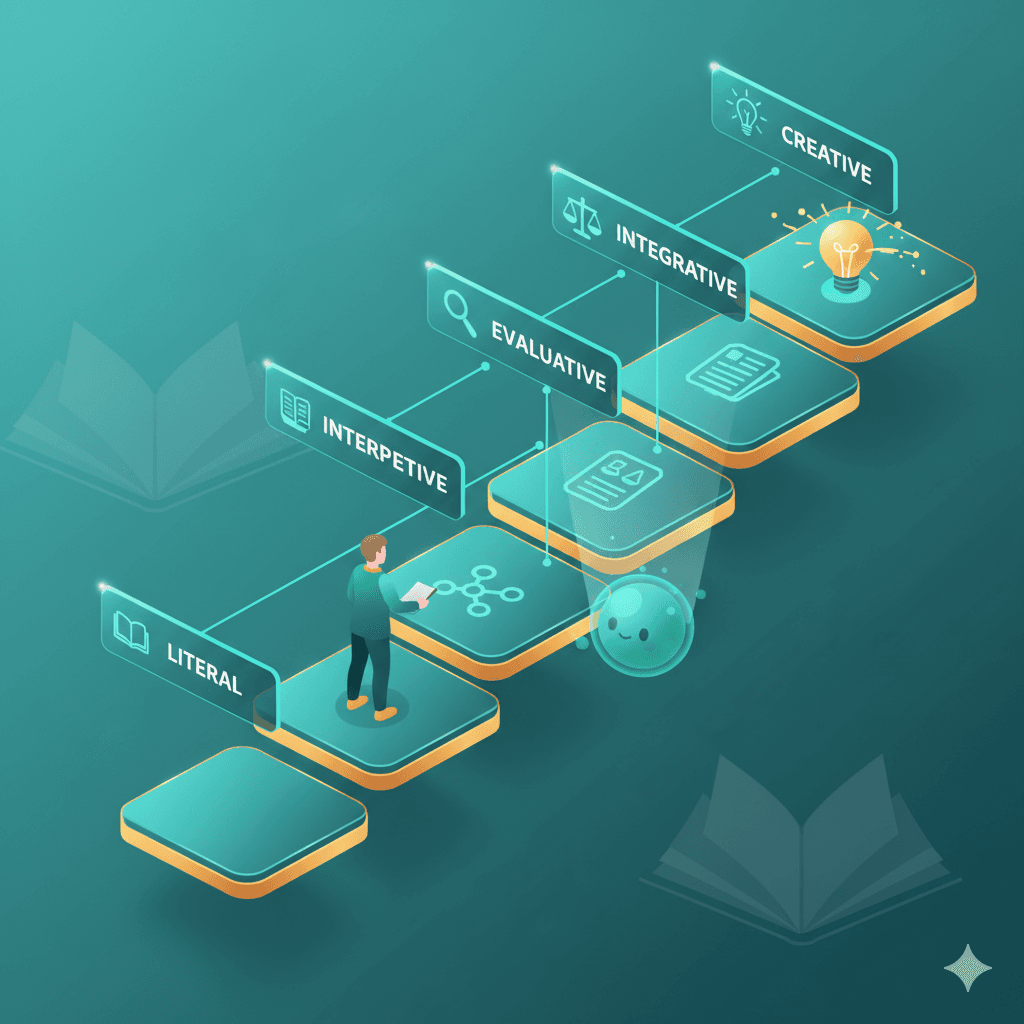
Deep reading is not about remembering what an author said. It’s about thinking with them and then extending their ideas into your own life. Educational psychologists describe five levels of reading comprehension. Each level takes you deeper—from literal recall to creative synthesis.
At Readever, we designed our AI reading companion around these levels so that every reader can move from surface understanding to insight generation—and you can explore every book referenced below for free inside Readever’s library once you sign in.
TL;DR: How to Unlock Creative Comprehension
- Master the five levels: literal, interpretive, evaluative, integrative, and creative comprehension.
- Ask the right guiding question at each stage so your brain knows what to look for.
- Use Readever prompts, cross-book linking, and creative workspaces to climb from Level 1 to Level 5 faster.
What Are the Five Levels of Reading Comprehension?
The five levels of reading comprehension move you from recognizing words to generating new ideas. Use the framework below as a quick reference whenever you want to improve reading comprehension depth without losing the joy of the story.
| Level | Core Skill | Guiding Question | What Unlocks the Next Level | Readever Booster |
|---|---|---|---|---|
| Literal | Capture explicit facts and sequence | What does the text actually say? | Spot patterns, not just details | Smart highlights and flashcard recall |
| Interpretive | Infer motives, tone, and implications | Why did this happen or matter? | Recognize subtext and cause-effect | Socratic prompts and tone analysis |
| Evaluative | Judge credibility and bias | Do I agree—and why or why not? | Ground opinions in evidence | Counterarguments and source checks |
| Integrative | Connect ideas to wider knowledge | How does this connect to my world? | Build cross-domain mental models | Reflection prompts and knowledge graphs |
| Creative | Generate original insight or output | What new idea can I create from this? | Apply, teach, or build something new | Creative workspace and remix tools |
Level 1: Literal Comprehension — Understand What’s There

Goal: grasp explicit facts, events, and stated information.
Guiding question: What does the text actually say?
Fiction spotlights
- In The Great Gatsby, you recall that Gatsby throws lavish parties every weekend, lives in West Egg, and dies at the end of the novel.
- In Harry Potter and the Sorcerer’s Stone, you remember that Harry receives his Hogwarts letter on his eleventh birthday and the villain is Voldemort.
Nonfiction spotlights
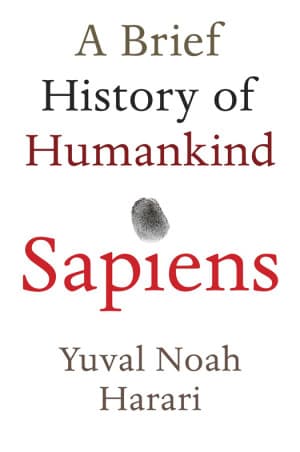
- From Sapiens, you recall that the Agricultural Revolution began about 10,000 years ago.
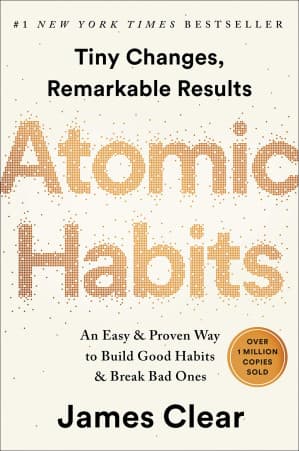
- From Atomic Habits, you note the four steps of habit formation: cue, craving, response, reward.
📚 Open any of these books inside Readever to read them for free while the assistant surfaces just-in-time highlights.
📈 Level-up move: summarize the paragraph in your own words before turning the page so interpretation has raw material to work with.
🟩 Readever helps: automatic highlights of key names, dates, and definitions; flashcard-style recall checks.
Level 2: Interpretive Comprehension — Read Between the Lines

Goal: infer motives, relationships, and unstated meanings.
Guiding question: Why did this happen or matter?
Fiction spotlights
- You realize Gatsby’s parties aren’t about wealth—they’re a desperate attempt to attract Daisy.
- In Pride and Prejudice, you sense that Darcy’s “pride” masks social insecurity, while Elizabeth’s “prejudice” hides wounded self-esteem.
Nonfiction spotlights
- Reading Thinking, Fast and Slow, you infer that Kahneman’s own career experiences shaped his caution about overconfidence.
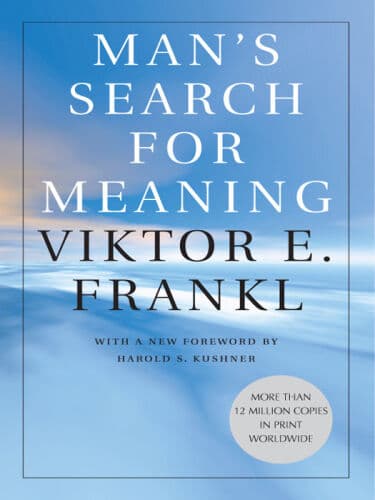
- In Man’s Search for Meaning, you understand Frankl’s description of suffering as a philosophical stance, not just memoir.
📚 Dive into each title for free on Readever and annotate as you go—the AI co-reader will nudge you toward deeper, interpretive questions.
📈 Level-up move: ask “What is the author assuming?” or “What’s left unsaid here?” before you move on.
🔸 Readever helps: contextual annotations (“This gesture suggests…”), tone analysis, Socratic prompts that ask why.
Level 3: Evaluative Comprehension — Think Critically
Goal: judge validity, bias, and quality of argument.
Guiding question: Do I agree—and why or why not?
Fiction spotlights
- You question whether Orwell’s Animal Farm oversimplifies human political behavior.
- You notice that The Catcher in the Rye’s narrator may be unreliable—should we trust Holden’s cynicism?
Nonfiction spotlights
- You critique Homo Deus for its techno-determinism.
- You assess The Lean Startup’s assumption that rapid iteration works equally well for all industries.
📚 Launch any evaluation-worthy book from Readever’s catalog for free and collect evidence with side-by-side notes before making your call.
📈 Level-up move: line up the author’s evidence, your counter-evidence, and the missing evidence in a quick compare-and-contrast note.
🔳 Readever helps: comparison notes (“Critics argue that…”), opposing-view summaries, credibility checks for sources.
Level 4: Integrative Comprehension — Connect to the World
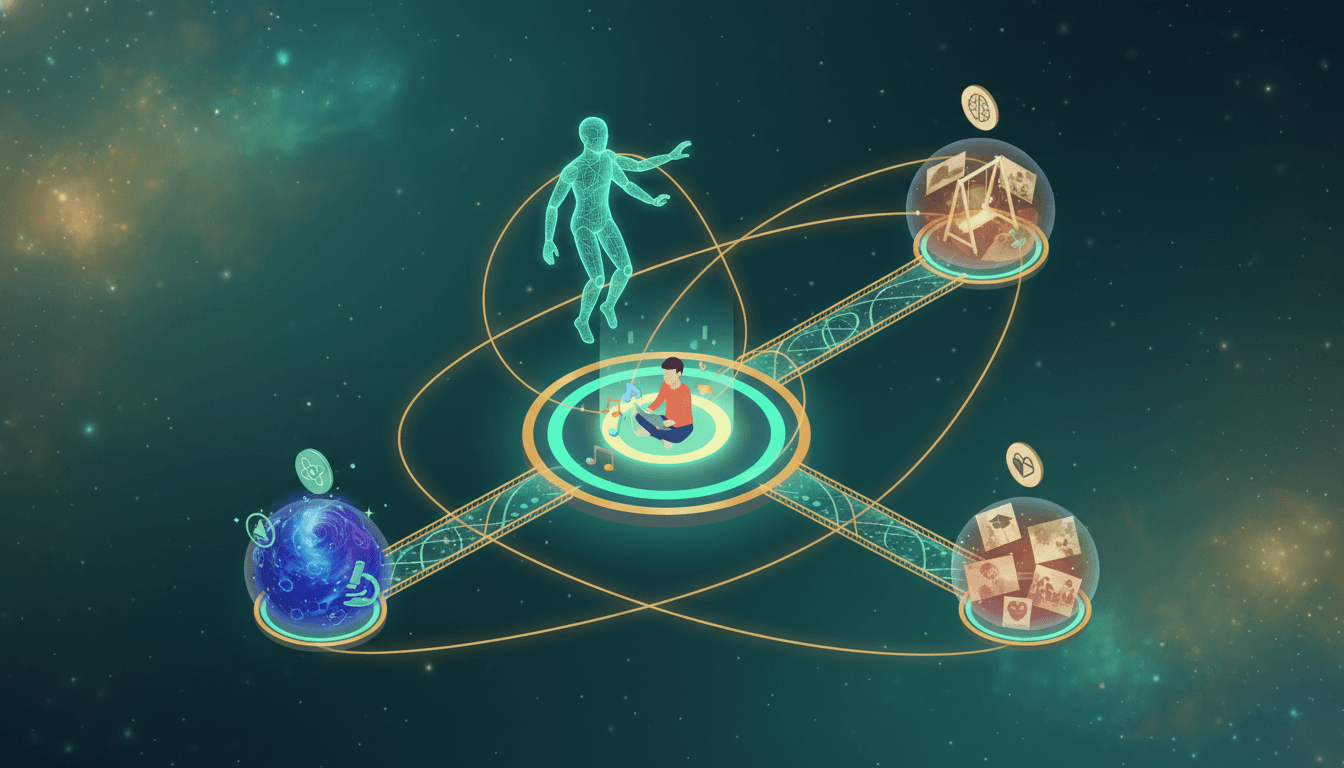
Goal: relate ideas to personal experience or other fields; achieve far transfer.
Guiding question: How does this connect to my world?
Fiction spotlights
- You link Atticus Finch’s integrity in To Kill a Mockingbird to moral courage you’ve witnessed in real life.
- You see parallels between Dostoevsky’s Raskolnikov in Crime and Punishment and the modern debate on moral relativism.
Nonfiction spotlights
- You apply the Thinking, Fast and Slow “System 1/System 2” model to your team’s decision-making habits.
- After reading Grit, you reinterpret your past career setbacks through the lens of perseverance.
📚 Open your Readever shelf (it’s free) to cross-reference multiple books at once and capture connections inside a single workspace.
📈 Level-up move: build a quick analogy or personal story that restates the idea—your brain stores connections more reliably than raw facts.
🔳 Readever helps: reflection prompts (“When have you faced a similar dilemma?”), cross-book linking, knowledge-graph visualization.
Level 5: Creative Comprehension — Create New Meaning

Goal: synthesize and originate; transform knowledge into new insight or product.
Guiding question: What new idea can I create from this?
Fiction spotlights
- You write a short story exploring the same themes as The Little Prince, but set in modern Silicon Valley.
- You compose a stage adaptation of The Stranger reframed through climate anxiety.
Nonfiction spotlights
- After reading Zero to One, you design a startup pitch around “definite optimism.”
- Inspired by Flow, you build a productivity routine that engineers your own “optimal experience.”
📚 Use Readever’s free creative workspace to remix highlights from any book in your library into outlines, scripts, or prototypes without leaving the page.
📈 Level-up move: teach the concept, design a template, or ship a small project—creative comprehension sticks when you make something tangible.
🔳 Readever helps: creative workspace that lets you remix annotations into essays, concept maps, or prototypes.
How Readever Improves Every Reading Comprehension Level
Most AI tools for reading stop at the first two levels—they summarize, explain, and help you “get through” a book faster. Readever is different because it guides you through every level:
- Prime your read: auto-highlight crucial facts so literal comprehension is effortless.
- Probe the subtext: ask follow-up questions with Socratic prompts that push you into interpretation and evaluation.
- Map your insights: stitch together ideas across authors using knowledge graphs and saved reflections.
- Create your output: remix annotations into essays, playbooks, or prototypes so Level 5 becomes second nature.
When you sign into Readever, you can read the mentioned classics for free, run deep reading strategies with AI prompts, and capture your reflections in one place.
That’s how reading becomes thinking—and how thinking becomes creation.
Ready to climb all the way to creative mastery? Try Readever for free, unlock the mentioned books without paying a cent, and let an AI companion nudge you up every level of comprehension.
Reading Comprehension FAQs
How do I improve reading comprehension quickly?
Start each session with a literal recap, then layer interpretive “why” questions before you move forward. Readever’s instant Q&A prompts and spaced recall cards make it easy to run this routine in minutes while you read any book for free.
What’s the difference between the five levels of reading comprehension?
Literal comprehension locks in facts, interpretive comprehension reads between the lines, evaluative comprehension judges ideas, integrative comprehension connects them to your world, and creative comprehension generates original output. The table above distills how each step unlocks the next—and Readever automates the nudges that keep you climbing.
Can Readever help me practice deep reading strategies?
Yes. The AI reading companion suggests deep reading strategies such as Socratic questioning, cross-book linking, and creative remixing. Because the catalog is free to explore, you can practice on classics, business books, or personal development titles without hunting for PDFs.
🌟 Read deeper. Think clearer. Create freely.
That’s the Readever way.