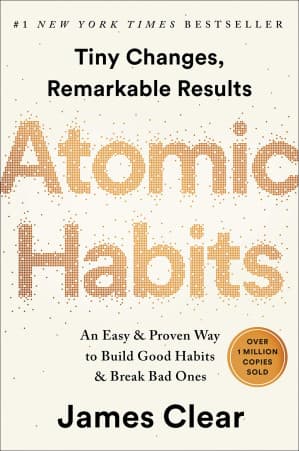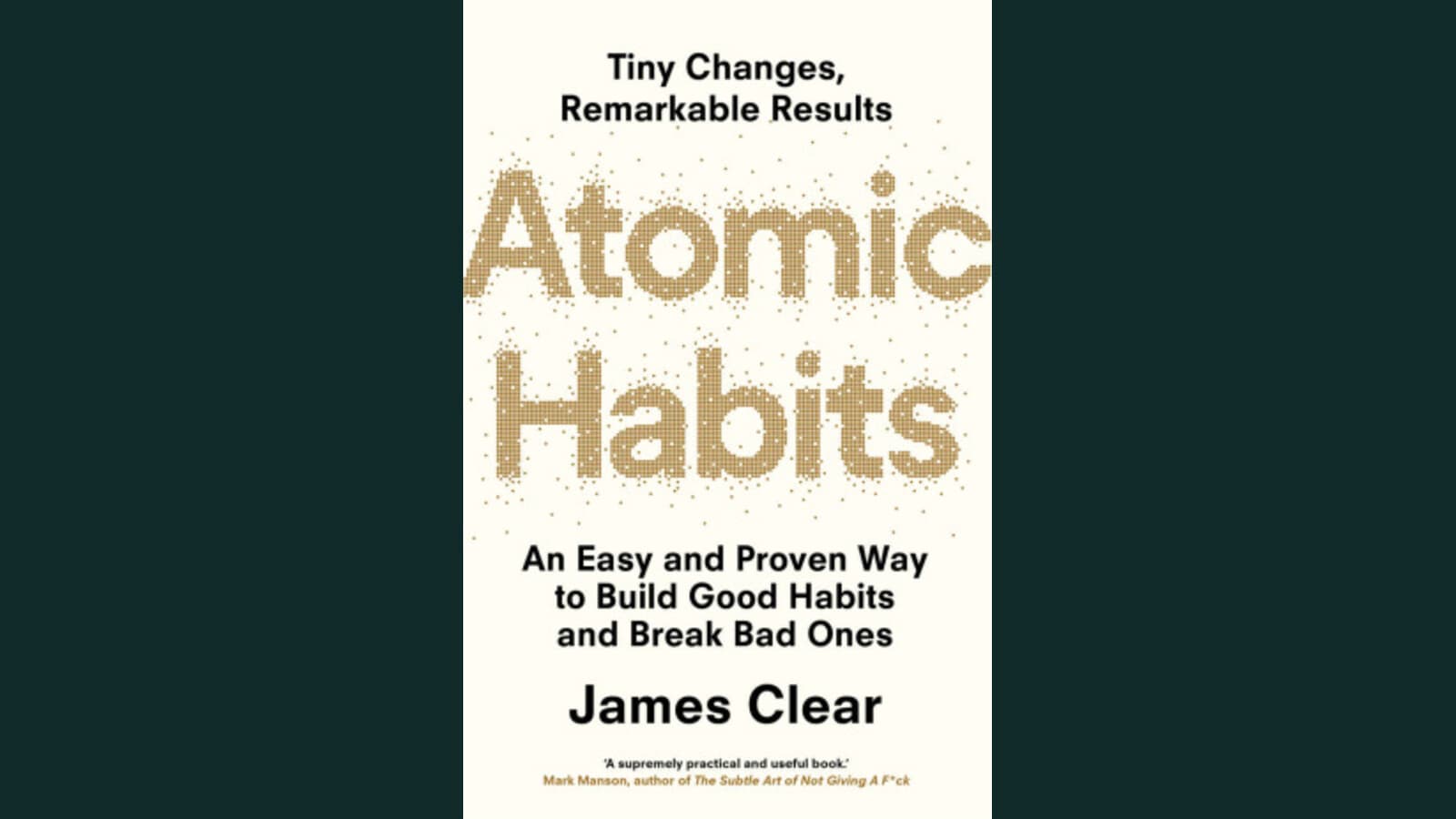
Atomic Habits is most useful when you read it as a workshop, not as a collection of motivational ideas. James Clear organizes behavior change around small actions, repeated systems, and an environment that makes the desired action easier to notice and perform. The practical challenge is not remembering every example. It is selecting one behavior, testing the framework, and learning from what actually happens.
This guide gives you a four-week reading plan, a map of the book’s major ideas, and prompts that convert reading into a manageable experiment. It does not reproduce the book’s text, and it is not a substitute for reading the full work.
Before You Read: Choose One Behavior
Pick one behavior that is specific enough to observe. “Become healthier” is too broad; “put on walking shoes after lunch” can be seen, scheduled, and adjusted. Write down:
- The behavior: What will you actually do?
- The context: When and where could it happen?
- The smallest version: What can you complete even on a difficult day?
- The evidence: How will you know whether you did it?
Keep the experiment modest. The point is to understand the system, not to redesign your life in one reading session.
The Core Ideas to Track
Systems Before Outcomes
Goals identify a direction, but repeated processes determine what happens on ordinary days. As you read, distinguish between the result you want and the recurring action that could produce it. Ask whether your current environment supports that action or requires constant effort to overcome friction.
Identity and Repeated Evidence
The book connects durable change with identity: repeated actions become evidence for how you see yourself. Use this carefully. An identity should support a practice without becoming a reason for perfectionism. Missing once is information about the system; it does not invalidate the identity you are building.
The Habit Loop
Clear describes habit formation in four stages: cue, craving, response, and reward. In plain language, the cue signals a possible reward, the craving supplies motivation, the response is the action, and the reward closes the loop. When a habit is not working, locate the failure point instead of labeling yourself undisciplined. Perhaps the cue is invisible, the action is too large, or the reward arrives too late to reinforce the behavior.
The Four-Law Framework
Clear names the Four Laws of Behavior Change: make it obvious, make it attractive, make it easy, and make it satisfying. The inversions can help analyze an unwanted habit. Use the laws as design questions, not guarantees. Treat these as design questions rather than slogans:
- What can make the cue easier to notice?
- What can connect the action with an existing source of motivation?
- What can reduce the number of steps required to begin?
- What immediate signal can mark completion?
A Four-Week Atomic Habits Reading Plan
Week 1: Foundations and Baseline
Read The Fundamentals (chapters 1–3), which establishes the relationship among small changes, systems, identity, and the four-stage model. Pagination varies by edition, so follow part and chapter labels rather than page numbers. Do not change everything yet. Observe your chosen behavior for several days.
Record the time, place, preceding action, emotional state, and practical friction around each attempt. At the end of the week, write a one-sentence system statement: “I am trying to make [behavior] more likely by changing [context].”
Week 2: Cues and Environment
Read the 1st Law: Make It Obvious (chapters 4–7) and begin the 2nd Law: Make It Attractive (chapters 8–10). Focus on awareness, cues, environment, and motivation. Map the places where your behavior competes with other cues. Then make one environmental change: place an object where it will be seen, prepare the workspace in advance, or remove one distracting step.
Run the same setup for at least three attempts before judging it. A single easy or difficult day is not enough evidence.
Week 3: Friction and the Smallest Viable Action
Read the 3rd Law: Make It Easy (chapters 11–14). Focus on repetition, friction, and getting started. Reduce the habit to an opening action that takes very little effort. If the goal is a reading practice, the smallest action might be opening the book and reading one page at a fixed time.
Measure starts rather than ambitious finishes. Once starting is reliable, increase the duration gradually.
Week 4: Feedback, Recovery, and Review
Read the 4th Law: Make It Satisfying (chapters 15–17), then use Advanced Tactics (chapters 18–20) to review fit, motivation, and sustainable adjustment. Choose a simple completion signal—a check mark, short note, or calendar mark. Avoid a tracking system that takes more energy than the habit.
At the end of the week, review the month:
- Which cue produced the most consistent start?
- Where did friction remain?
- Did the reward reinforce the behavior or distract from it?
- What happened after a missed day?
- What one change should the next version of the system include?
A One-Page Habit Experiment
Use this template while reading:
| Field | Your note |
|---|---|
| Behavior to build or reduce | |
| Current cue | |
| Desired cue | |
| Smallest viable response | |
| Friction to remove or add | |
| Immediate completion signal | |
| Review date | |
| Keep, change, or stop? |
Only change one major variable between review periods. Otherwise, you will not know which adjustment affected the result.
Filled example after Week 2:
| Field | Example note |
|---|---|
| Behavior to build | Read one page after lunch |
| Current cue | Returning the lunch plate to the kitchen |
| Desired cue | Paperback placed on the chair before lunch |
| Smallest viable response | Open the book and read one paragraph |
| Friction to remove | Phone charges in another room for ten minutes |
| Immediate completion signal | One check mark on a paper card |
| Review date | Friday after five attempts |
| Keep, change, or stop? | Keep the cue; move the book closer because two starts were missed |
This example changes the environment first and waits for several attempts before changing another variable.
Questions to Ask While Reading
- Am I pursuing an outcome without defining a repeatable process?
- What evidence does my current environment give me about the behavior it rewards?
- Which step feels difficult before I even begin?
- Is the habit too large for the context in which I expect it to happen?
- What would recovery after a missed day look like?
- Does my chosen identity allow experimentation, or does it demand perfection?
- Which example in the book is genuinely transferable to my life, and which depends on a different context?
Common Reading Mistakes
Collecting Tactics Without Running an Experiment
A long list of tips can feel productive while leaving behavior unchanged. Choose one framework and test it long enough to learn from it.
Treating Tiny as Trivial
A small action matters because it lowers the cost of starting and creates repetitions. It is not a guarantee of a large outcome. The system still needs time, feedback, and adjustment.
Ignoring Constraints
Time, health, caregiving, money, workplace rules, and other constraints affect which habits are realistic. Adapt the framework to your circumstances rather than turning a mismatch into self-blame.
Turning Tracking Into the Goal
A streak is a measurement tool, not the purpose of the habit. If protecting the streak encourages low-quality or unnecessary behavior, revise the measure.
Discussion and Journal Prompts
- Which cue is most reliable in the experiment you are actually running?
- What result changed after you altered one variable—and what evidence is still missing?
- What identity can support practice without turning one missed repetition into failure?
- Where might the framework oversimplify a problem that also requires resources, support, or structural change?
Read Atomic Habits With Readever
Open Atomic Habits on Readever and use highlights, contextual explanations, and Book Chat to test your understanding without replacing the full text. Keep one note for the system you are testing, one for evidence, and one for the next adjustment.
Related reading: productivity collection · The Power of Habit · book guides
Frequently Asked Questions
Is Atomic Habits a quick read?
The prose is accessible, but a fast finish is not necessarily the most useful approach. Reading one framework at a time and testing it for several days creates more useful feedback than collecting every tactic in a weekend.
Should I read the chapters in order?
First-time readers will benefit from the sequence because the early concepts support the later tactics. On a reread, you can return directly to the section connected with the part of your system that is failing.
How many habits should I change at once?
For this reading plan, start with one. A narrow experiment makes it easier to identify the cue, friction, and feedback that influence the behavior.
Can I use this guide without reading the book?
The guide can help you plan your reading, but it intentionally does not reproduce the book’s examples or complete argument. Use it alongside a legally obtained copy.
What should I do if the system stops working?
Review the context before increasing pressure. Check whether the cue disappeared, the action became too large, the environment changed, or the reward no longer matters. Then modify one variable and test again.