Flashcards can help you remember a book, but only when the cards ask you to retrieve ideas that are worth remembering. Copying every highlight into a deck usually creates a large queue of vague prompts, isolated quotations, and details you never needed. The deck grows while understanding stays shallow.
A better process is selective. Read for meaning first, identify knowledge you expect to use later, turn each item into a clear question, answer from memory, and check the answer against the book. This makes the flashcard a small retrieval exercise rather than a storage container.
The workflow below works especially well for nonfiction, textbooks, professional reading, and books used for an exam. It can also support literary study when you need to recall characters, context, motifs, or interpretive evidence. The aim is not to reduce an entire book to cards. It is to preserve a compact set of high-value ideas while keeping the book and your notes available for nuance.
1. Decide what the book needs to help you remember
Start with a purpose. Are you reading for an exam, learning vocabulary, preparing to use a framework at work, comparing arguments, or building background knowledge? A card is useful only in relation to a future task.
Write a one-sentence retention goal before making the deck. For example:
- “I need to distinguish the five theories discussed in this course.”
- “I want to recall the decision checklist when reviewing a project.”
- “I need the definitions and examples required for the certification exam.”
- “I want to remember the author’s central claim and the strongest objections.”
This goal gives you a filter. A memorable anecdote may be enjoyable without deserving repeated review. A short definition may look plain but be essential because later chapters depend on it. Select for future usefulness, not for how highlightable a sentence appears.
If the reading supports a deadline, Readever’s exam reading sprints can help you structure focused sessions. The flashcard workflow should remain subordinate to the reading goal, not become a second project that consumes the available study time.
2. Read a meaningful section before creating cards
Do not stop after every paragraph to manufacture a prompt. Read a complete section, argument, or chapter segment first. You need enough context to decide which ideas are central, which are supporting examples, and which qualifications change the meaning.
During the first pass, mark candidates lightly. Good candidates often include:
- definitions that the author uses consistently;
- distinctions between concepts that are easy to confuse;
- steps in a process you will need to perform;
- causal explanations you should be able to reconstruct;
- formulas, rules, or thresholds required for a real task;
- named evidence that supports or challenges a major claim;
- relationships among ideas across chapters.
Then close the section and explain its point in your own words. If you cannot do that, more cards are not the immediate solution. Reopen the text, resolve the confusion, and write a short note. Flashcards strengthen retrieval of an understood idea; they do not reliably repair an idea that was never understood.
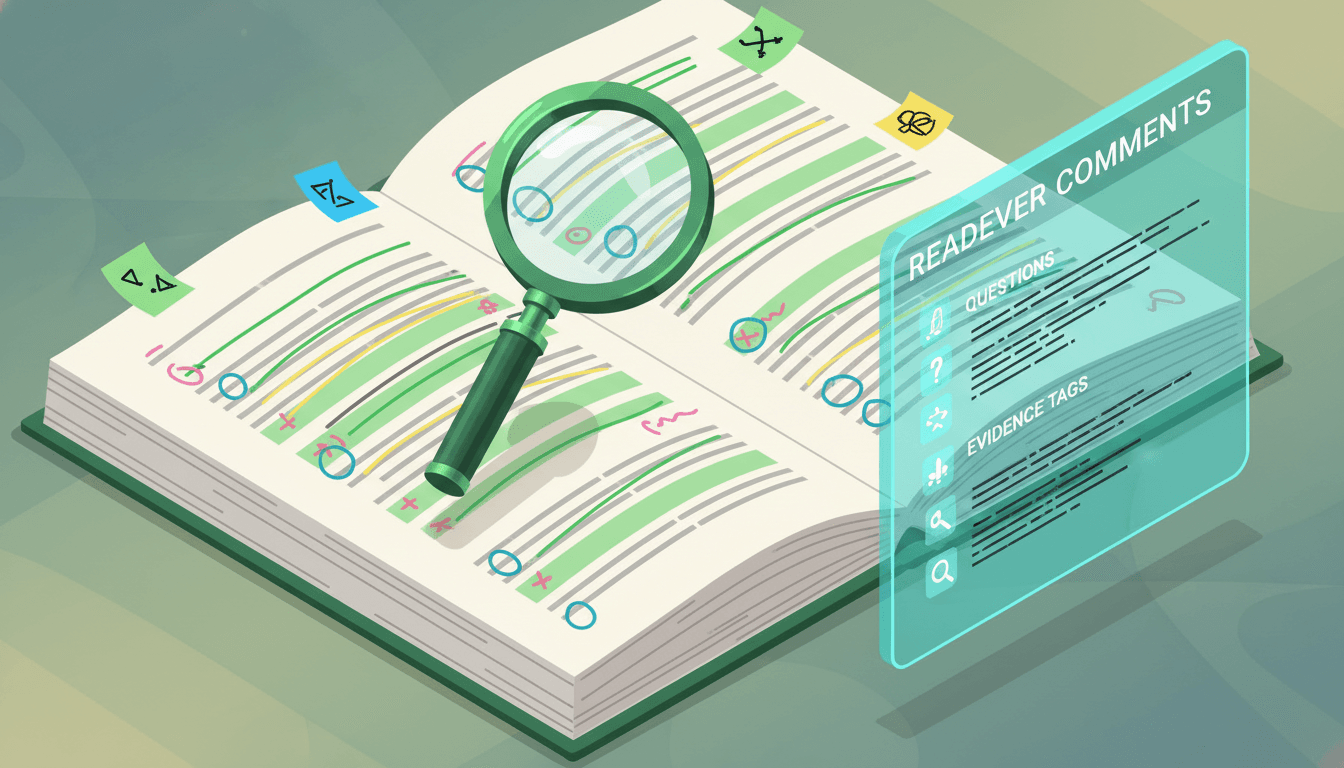
Readever’s AI book highlights can support navigation and help you revisit marked passages, but any generated suggestion should be checked against the original page. The source text remains authoritative for wording, scope, numbers, and qualifications.
3. Choose card-worthy knowledge with a strict filter
Before converting a note, ask four questions:
- Will I need to retrieve this without the book open?
- Can I express the target knowledge clearly?
- Does remembering it improve understanding or action?
- Can one prompt test it without requiring an essay?
If the answer is no, keep the item in your notes instead. Notes are better for long explanations, personal reactions, unresolved questions, quotations, and connections that are still developing. Cards are better for knowledge with a reasonably stable answer.
Be selective with lists. A seven-part framework may deserve one overview card plus separate cards for the parts you repeatedly confuse. It probably does not need eight cards on the first day. Likewise, do not create cards for every name or date unless those details matter to your purpose.
A useful deck is intentionally incomplete. It captures the load-bearing ideas that allow other details to make sense. You can add cards later when practice reveals a genuine gap.
4. Write one clear question per card
Each card should make the retrieval target obvious. Avoid prompts such as “Chapter 4,” “Explain marketing,” or a pasted paragraph with one missing word. Those prompts either reveal too little about what is being tested or allow you to guess from surface clues.
Prefer focused questions:
- “What is the difference between correlation and causation?”
- “Which three conditions must be present before using this model?”
- “Why does the author reject the conventional explanation?”
- “What is one example of the principle in a new context?”
- “Given this scenario, which step comes next and why?”
Keep the expected answer short enough to judge. If an answer requires several unrelated points, split the card. This is sometimes called keeping information atomic: one card should test one main relationship. Atomic does not mean trivial. A card can test a meaningful comparison or application as long as the success criterion is clear.
Use cloze deletion sparingly. Removing a term from a sentence is efficient for exact vocabulary, formulas, or paired facts. It is less useful when the surrounding sentence lets you guess without understanding. When interpretation matters, ask a direct question instead.
5. Answer in your own words and preserve a source locator
Write the answer from memory before copying anything. Then check the book and correct your explanation. This sequence matters because an answer copied first can feel familiar even when you could not have produced it independently.
A practical card has four fields:
- Prompt: the question or scenario;
- Answer: a concise response in your own words;
- Source: book title plus chapter, section, page, or location;
- Context: an optional example, caveat, or connection.
The source locator keeps the card auditable. If the wording becomes confusing months later, you can return to the surrounding argument rather than treating the card as an independent authority. This is particularly important for technical, academic, medical, legal, or financial reading, where a compressed answer can omit a condition that changes its use.
Quote only when exact language is genuinely necessary, such as a definition you must reproduce accurately. Otherwise paraphrase. Never copy a substantial passage into a deck simply because it is highlighted. Besides making review slow, long copied passages can detach copyrighted text from its original context.
6. Create cards that test application, not recognition alone
Definition cards are a start, but many books are useful because they change how you notice, compare, or decide. Add a small number of application cards that require you to use an idea.
For a decision framework, describe a fresh scenario and ask which part applies. For a scientific concept, ask what result you would predict if one variable changed. For history, ask how two causes differ or what evidence would weaken an interpretation. For professional reading, ask what question the framework would prompt in a meeting.
Do not make the scenario so elaborate that reviewing the card becomes a reading-comprehension test. Include only the details needed to discriminate between plausible answers. If several interpretations are defensible, state the evaluation rule in the answer and retain the source locator.
Application cards also expose false confidence. Recognizing a term on a page is easier than selecting it in a new situation. When you miss, revisit the underlying explanation rather than memorizing the scenario’s wording.
7. Review with retrieval, spacing, and honest grading
During review, attempt the answer before revealing it. Saying “I knew that” after seeing the back is recognition, not retrieval. Give yourself a brief pause, answer aloud or in writing, and then compare.
Grade by whether you retrieved the intended meaning, not whether your sentence exactly matches the card. Mark a miss when you omitted a defining condition, confused two concepts, or could not produce the answer. Mark a partial response honestly and revise an ambiguous card instead of repeatedly blaming your memory.
Space reviews over time rather than repeating the whole deck in one sitting. Retrieval practice and distributed practice are well-supported learning techniques, but their value depends on the material, learner, feedback, and schedule. No single interval guarantees retention. Use the review system’s defaults as a starting point and adjust when cards are consistently too easy, too difficult, or no longer relevant.
Always inspect repeated misses. The card may contain too much, use a weak cue, test an unclear idea, or require context that belongs in a note. Rewrite or delete it. Maintaining a small, accurate deck is more valuable than preserving every card you created.
8. Use a chapter-to-deck workflow you can repeat
A simple routine keeps card creation proportional to reading:
After each meaningful section: close the book and write a two- or three-sentence summary from memory.
After each chapter: choose no more than a handful of ideas that meet your retention goal. The limit is a forcing function, not a universal rule; a dense textbook chapter may require more.
During card creation: write focused prompts, answer from memory, verify against the source, and add a locator.
At the next session: review due cards before creating many new ones. Note which misses reflect forgetting and which reflect poor card design.
At the end of the book: remove duplicates, merge overlapping prompts, and create a small set of synthesis cards that connect chapters. Keep the chapter notes even if a detail does not become a card.
You can browse more study-oriented reading material in Readever’s education category, or return to the Readever blog for related workflows. When you are ready to keep reading, highlights, and questions together, open Readever.
Frequently asked questions
Should I turn every book highlight into a flashcard?
No. Highlights can mark examples, reactions, or passages worth revisiting, while flashcards should test knowledge you expect to retrieve later. Convert only the ideas that match your retention goal and have a clear, useful answer.
How many flashcards should I make per chapter?
There is no universal number. Start with a small handful of load-bearing ideas, then add cards when review or real use exposes a gap. A fixed quota can encourage weak cards in a simple chapter and insufficient coverage in a dense one.
Should flashcard answers use the author’s exact words?
Usually not. Answering in your own words helps reveal understanding and keeps cards concise. Use exact wording only when precision is necessary, and include a source locator. Do not reproduce long passages from the book.
Can I use AI to make flashcards from a book?
AI can suggest candidate prompts or help format notes, but it may omit context, invent details, or choose trivia. Verify every retained card against the book, rewrite it for your purpose, and attempt the answer yourself.
Are flashcards useful for fiction?
They can help with names, relationships, chronology, vocabulary, and evidence for analysis. They are less suited to preserving the full reading experience, ambiguity, voice, or emotional effect. Keep interpretive notes alongside any deck.
What should I do when I keep missing the same card?
Check the card before increasing repetition. Split a crowded prompt, clarify the cue, add necessary context, or return to the book to rebuild understanding. Delete the card if the knowledge no longer serves your goal.