Critical thinking is not a single trick. It is a collection of habits: slowing down when a claim feels obvious, asking what evidence would change your mind, separating a persuasive story from reliable data, and expressing uncertainty honestly. The best book for you depends on which of those habits needs the most work.
This list offers several routes into the subject rather than pretending one title covers everything. Some books explain predictable errors in judgment. Others teach readers to test claims, interpret statistics, update beliefs, or notice how identity affects reasoning. Each entry includes a practical use case and a limitation, so you can select a book for a real need instead of building an unread stack.
Two titles on this list have live Readever pages: Thinking, Fast and Slow and Factfulness. Use those pages as starting points, then read the original books closely enough to examine their evidence and scope.
What Makes a Critical-Thinking Book Useful?
A useful critical-thinking book does more than collect fallacies or tell you to be skeptical. It gives you a repeatable question, test, or practice that can travel into ordinary reading and decisions. Good candidates also show where their own frameworks apply and where they may not.
Look for four qualities:
- A defined problem: Is the book about cognitive bias, statistical reasoning, misinformation, argument, or belief revision?
- A usable method: Does it give you a way to inspect evidence, compare alternatives, or record uncertainty?
- Examples with boundaries: Can you see both how the method works and when context changes the answer?
- Verifiability: Does the book point toward sources, data, or arguments you can inspect rather than asking for trust alone?
Critical reading also requires a little resistance. Do not treat any book—including a book about reasoning—as a final authority. Mark the claims that carry the argument, identify the evidence offered, and ask what later research or criticism might qualify the conclusion.
1. Thinking, Fast and Slow — Daniel Kahneman
Thinking, Fast and Slow is a broad introduction to the contrast between rapid, intuitive judgment and slower, effortful thought. It is useful for building a vocabulary around heuristics, framing, overconfidence, and the many ways judgment can be influenced by how a problem is presented.
Start here if you want to recognize why a confident answer can arrive before careful analysis. While reading, keep a bias log: record the situation, your initial judgment, the information available, and what a slower check revealed. Avoid using bias labels as diagnoses of other people. The more productive question is how a process can make error easier to detect.
The book is ambitious and should not be treated as the last word on every study it discusses. Psychology has continued to examine replicability and effect sizes. Use the book as a map of questions, then verify consequential claims through current research. Explore the live Readever page for Thinking, Fast and Slow.
2. Factfulness — Hans Rosling, Ola Rosling, and Anna Rosling Rönnlund
Factfulness focuses on large-scale claims about the world and the instincts that can distort them. Its practical value is the prompt to replace a dramatic impression with a distribution, trend, comparison, or base rate. It is especially useful for readers who encounter global-development claims in news, presentations, and social media.
Use it to practice data questions: What period is being compared? Is the value a total, rate, median, or average? Which population is included? What is missing? Could two apparently opposing claims both be true at different scales?
The book encourages a more measured worldview, but calmness is not proof and a chart is not self-interpreting. Check definitions, collection methods, revisions, and primary datasets before relying on a number. The Readever page for Factfulness can help you begin a structured reading pass.
3. The Scout Mindset — Julia Galef
The Scout Mindset examines the difference between defending a preferred position and trying to see the terrain accurately. Its central value is motivational: reasoning is affected not only by what we know, but by whether we experience changing our mind as curiosity, loss, loyalty, or threat.
Choose this book if your challenge is not recognizing evidence but staying open when evidence conflicts with identity or prior commitment. Try writing a short “belief update” after a chapter: what you believed, what changed, how much your confidence moved, and what remains unresolved.
The scout metaphor is a helpful orientation, not a guarantee of neutrality. No one stands fully outside incentives, communities, or values. Pair openness with domain knowledge and explicit evidence standards so that flexibility does not become indiscriminate doubt.
4. Superforecasting — Philip E. Tetlock and Dan Gardner
Superforecasting is valuable for readers who need to reason about uncertain future events. It emphasizes breaking broad questions into parts, using base rates, expressing confidence probabilistically, and updating as evidence arrives.
Read it if your work involves forecasts, plans, risks, or claims that something “will” happen. Convert vague predictions into testable statements with a deadline and measurable outcome. Record your probability before the result is known; otherwise hindsight will make the original judgment look clearer than it was.
Forecasting methods do not eliminate uncertainty, and results from structured forecasting settings may not transfer perfectly to every personal or organizational decision. The book is most useful as a discipline for making assumptions visible, not as a promise of superior foresight.
5. Calling Bullshit — Carl T. Bergstrom and Jevin D. West
Calling Bullshit addresses misleading uses of data, models, charts, metrics, and scientific-sounding language. It is a practical choice for readers who consume dashboards, studies, viral graphics, or quantified business claims.
Its strongest reading habit is to trace a number backward. Where did it originate? What was measured? What denominator was used? Did a correlation become a causal claim? Does the visual scale exaggerate a difference? Practice by taking one chart each week and reconstructing the claim in plain language.
The provocative title can tempt readers toward performative debunking. Resist that. The aim is not to dismiss every imperfect analysis or embarrass its author; it is to identify the precise weakness, explain why it matters, and state what better evidence would resolve the issue.
6. Think Again — Adam Grant
Think Again presents rethinking as a skill: revisiting assumptions, seeking disconfirming information, and making it socially safer for people to revise a view. It works well for readers who want an accessible bridge between individual reasoning and group discussion.
Choose it if meetings become contests over who was right first. A practical exercise is to add a revision clause to a proposal: “I would change this recommendation if…” Then name the evidence, threshold, or event that would trigger a review.
The book offers broad examples and memorable concepts rather than a complete method for evaluating technical evidence. Pair it with subject expertise, statistical guidance, and primary sources when the decision is consequential.
7. The Demon-Haunted World — Carl Sagan
The Demon-Haunted World is a defense of scientific skepticism and public reasoning. Its “baloney detection” orientation encourages readers to ask whether claims are testable, whether alternative explanations were considered, and whether an authority’s confidence is supported by evidence.
Read it if you want to examine extraordinary claims without losing a sense of curiosity. Select one claim and write the strongest version of it before testing it. Identify what observation would count against it and whether the claim changes whenever contrary evidence appears.
The book is not a substitute for specialized scientific training, and skepticism should not become automatic contrarianism. Expertise, consensus, and institutions can be imperfect while still carrying relevant evidence. Evaluate how knowledge was produced rather than treating trust or distrust as a complete argument.
8. How to Read a Book — Mortimer J. Adler and Charles Van Doren
How to Read a Book is less about cognitive bias than disciplined comprehension. It distinguishes levels of reading and asks readers to identify a book’s structure, central questions, key terms, arguments, and unresolved problems.
Choose it when your main difficulty is evaluating a long argument rather than a single claim. After reading, try to state the author’s problem and conclusion in your own words, map the major supporting reasons, and identify the point at which you disagree. That sequence helps prevent criticism of an argument you have not yet understood.
Some examples and assumptions reflect the era in which the book was written, and its program can feel overly formal for every text. Adapt the method. The durable lesson is to earn disagreement through accurate comprehension.
How to Choose Your First Critical-Thinking Book
Match the title to the friction you actually experience:
- Choose Thinking, Fast and Slow for a broad vocabulary of judgment and bias.
- Choose Factfulness for global claims, trends, and data context.
- Choose The Scout Mindset when identity makes belief revision difficult.
- Choose Superforecasting for probabilities, predictions, and updates.
- Choose Calling Bullshit for charts, metrics, models, and quantitative rhetoric.
- Choose Think Again for rethinking in teams and conversations.
- Choose The Demon-Haunted World for scientific skepticism and extraordinary claims.
- Choose How to Read a Book for the structure and evaluation of long arguments.
Do not begin with the most famous title if another addresses your immediate problem more directly. One book, read actively and applied to a live question, is more useful than several books skimmed for slogans.
A Four-Pass Reading Practice for Better Reasoning
Critical thinking improves when reading produces inspectable work. A simple four-pass method keeps notes connected to evidence:
- Frame the question. Write the claim or decision you are investigating. Define unfamiliar terms before arguing about them.
- Map the case. Record the conclusion, supporting reasons, evidence, assumptions, and alternatives. Distinguish what the author shows from what the author infers.
- Test the edges. Ask what population, period, or conditions limit the claim. Search for base rates, counterexamples, and credible disagreement.
- State your update. Record what changed, how confident you are, and what evidence would move you again.
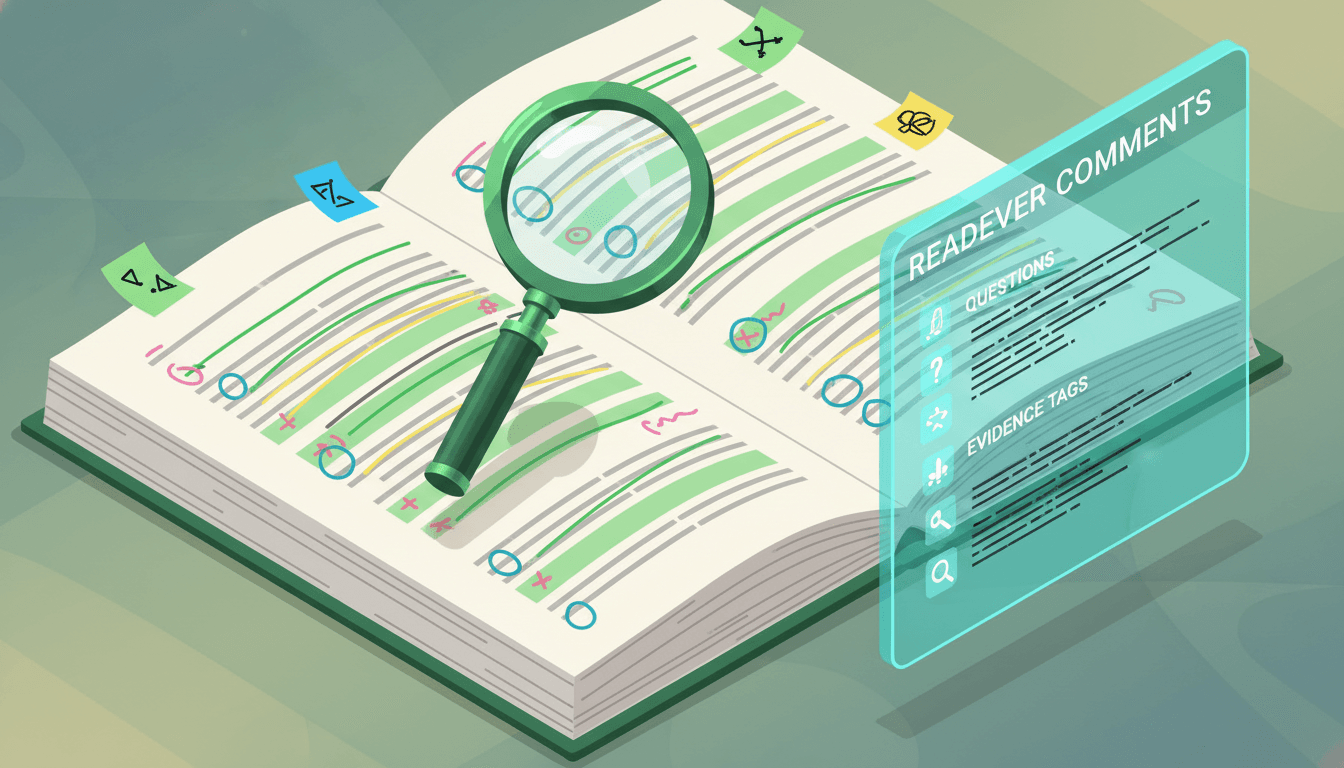
Readever’s nonfiction reading systems page offers a way to think about purpose-driven reading and connected notes. AI assistance can help you ask contextual questions while reading, but it cannot establish that a source is correct, current, complete, or appropriate for your decision. Verify important claims in original research, primary data, and relevant expert review.
Best Books on Critical Thinking FAQ
What is the best critical-thinking book for beginners?
The Scout Mindset is an approachable starting point for belief revision, while Thinking, Fast and Slow offers a broader vocabulary for judgment. Choose according to your goal: openness and updating for the former, or a wide survey of heuristics and bias for the latter.
Which book is best for learning to evaluate statistics?
Calling Bullshit is the most directly practical choice on this list for charts, metrics, models, and quantitative claims. Factfulness complements it by emphasizing trends, distributions, comparison groups, and data context. Neither replaces formal statistics training.
Can reading books actually improve critical thinking?
Reading can supply concepts and methods, but improvement depends on practice, feedback, and domain knowledge. Apply one method to real claims, record your reasoning before outcomes are known, and review mistakes. No book guarantees better decisions.
Should I start with logic or cognitive biases?
Start with the failure you encounter most. Formal logic helps when arguments are structurally unclear. Bias-focused books help when framing, confidence, or intuitive judgment is the problem. Many readers benefit from alternating between careful argument mapping and real-world evidence checks.
How do I avoid becoming cynical while reading critically?
Replace blanket disbelief with calibrated questions. Ask what is known, how it was measured, how strong the evidence is, and what would change the conclusion. Critical thinking should improve discrimination between stronger and weaker claims, not make every source look equally untrustworthy.
Build a Reading Path, Not a Collection
Select one book, attach it to one real question, and create notes that preserve the claim, evidence, uncertainty, and next check. When you finish, choose the next title according to the weakness your notes reveal. That sequence turns a list into a practice. Explore more evidence-aware reading guides in the Readever blog.