You do not need to start philosophy by memorizing a timeline or forcing your way through the most difficult book on a university syllabus. Start with a question you genuinely care about: What makes a life good? What do we owe one another? Can we control our reactions? What is justice? How should we respond to suffering or uncertainty?
The books below form a beginner path rather than a ranking. It begins with an inviting overview, moves into ethics and political philosophy, explores two Stoic voices and a different philosophical tradition, and ends with literary approaches to freedom and meaning. We selected for approachability, philosophical range, a clear learning role, and the availability of editions with responsible introductions or notes. Ancient and translated works are treated as edition-sensitive; inclusion never implies that every edition contains the same text or supporting material. Readever’s Philosophy collection is a useful editorial destination, but the current catalog mapping may be sparse; the linked title pages below are the verified places to start.
The beginner philosophy reading list at a glance
| Starting question | Book |
|---|---|
| What have philosophers been arguing about? | Sophie’s World |
| What is justice, and what should society be? | The Republic |
| What makes a life flourish? | Nicomachean Ethics |
| How can I govern my own judgments? | Meditations |
| How should philosophy guide daily conduct? | Letters from a Stoic (an edition-dependent selection from Seneca’s letters) |
| What does it mean to act without forcing? | Tao Te Ching |
| How do we live in an indifferent world? | The Stranger |
| Can meaning survive extreme suffering? | Man’s Search for Meaning |
1. Sophie’s World by Jostein Gaarder
Best for: getting the map before entering the territory
Sophie’s World uses a novel-like frame to introduce major figures and questions in Western philosophy. It is not a substitute for the primary texts, and its coverage is selective, but it gives a beginner names, eras, and problems to recognize.
Read it with a notebook divided into three columns: philosopher, central question, and your first response. Do not try to retain every doctrine. The goal is to discover which questions make you want to continue.
Beginner move: When a chapter interests you, follow it with a short passage from that thinker rather than waiting to finish the entire survey.
2. The Republic by Plato
Best for: learning how philosophical dialogue works
The Republic asks what justice is and whether a just life is better than an unjust one. Its discussion expands into education, political order, knowledge, art, and the shape of the soul.
Beginners often meet the Allegory of the Cave in isolation. Reading more of the dialogue shows that philosophy is not just a collection of famous conclusions. It is a method of defining terms, testing examples, exposing contradictions, and revising a position.
Beginner move: Read one book of the dialogue at a time. After each section, write the strongest objection you can make to Socrates’ argument.
3. Nicomachean Ethics by Aristotle
Best for: asking what it means for a human life to go well
The Nicomachean Ethics examines flourishing, virtue, choice, friendship, pleasure, and practical wisdom. Aristotle’s approach is useful for beginners because it connects character to repeated action. Virtue is not a slogan or a feeling; it is developed through judgment and practice.
The text can be compressed and translation choices matter. Slow down when a familiar English word—“happiness,” “virtue,” or “soul”—appears to carry more weight than it does in everyday speech. Consult the translator’s introduction and glossary.
Beginner move: Choose one virtue discussed in the book and describe what too little, too much, and context-sensitive action might look like in an ordinary situation.
4. Meditations by Marcus Aurelius
Best for: a personal introduction to Stoic practice
Meditations records private reflections rather than a systematic textbook. Marcus repeatedly returns to attention, judgment, impermanence, duty, and the difference between what happens and the story the mind adds to it.
Its short passages make it approachable, but they can also be stripped of context and turned into motivational slogans. Remember that you are reading notes written within an ancient philosophical practice. A passage may be a reminder to the author, not a universal command to suppress emotion or tolerate harm.
Beginner move: Read five entries, choose one, and rewrite its question in your own words. Then test it against a real event that day.
5. Letters from a Stoic — a selected edition of Seneca’s Moral Letters to Lucilius
Best for: seeing philosophy applied to time, friendship, fear, and wealth
Letters from a Stoic is not one edition-neutral, complete modern book. The familiar Penguin Classics edition is a selection from Seneca’s Moral Letters to Lucilius, selected and translated with an introduction by Robin Campbell. Other publishers use the same English title for different selections or translations. Before comparing passages, check the translator, editor or selector, table of contents, and whether your edition is selected or complete.
Within that boundary, the letters give Stoic ideas a conversational form. Seneca addresses how to use time, prepare for loss, choose companions, relate to possessions, and practice philosophy rather than display it. Read the letters as arguments from a particular historical person, not as timeless life hacks. Seneca’s wealth and political position create tensions worth discussing. Those tensions can improve the reading: does the author live consistently with the advice, and does inconsistency invalidate an argument or make its difficulty more visible?
Beginner move: After each letter, write one sentence beginning, “Seneca wants the reader to practice…”
6. Tao Te Ching attributed to Lao Tzu
Best for: encountering a compact, non-Western philosophical classic
Tao Te Ching is a brief, poetic work associated with Daoist thought. It reflects on the Dao, naming, simplicity, leadership, desire, reversal, and wu wei, often translated as non-action or effortless action.
No single English rendering can settle the text. Translation is part of the philosophical experience. Compare two versions of a short chapter and note where word choice changes the apparent lesson. Resist the urge to force every paradox into a single proposition.
Beginner move: Choose one chapter and write two interpretations: a literal one and a practical one. Keep both open rather than rushing to decide which is “correct.”
7. The Stranger by Albert Camus
Best for: approaching philosophical questions through fiction
The Stranger is a novel, not a primer on existentialism. Its spare narration raises questions about alienation, social judgment, mortality, meaning, and the demand that a life appear intelligible to others.
Avoid reducing the protagonist to a role model or the novel to a single message. Pay attention to the gap between events, the narrator’s descriptions, and the interpretations imposed by other characters. That gap is where much of the philosophical work happens.
Beginner move: Track moments when society judges an emotion as much as an action. Ask what that reveals about the norms surrounding the character.
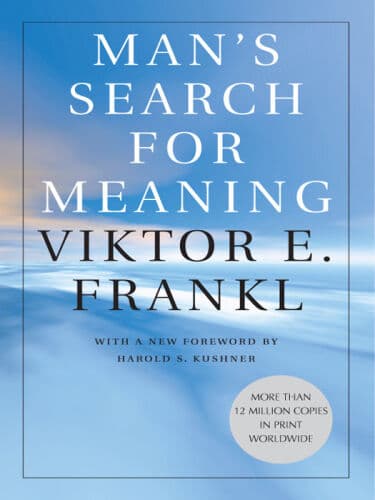
8. Man’s Search for Meaning by Viktor E. Frankl
Best for: thinking about meaning, responsibility, and suffering with care
Man’s Search for Meaning combines Frankl’s account of imprisonment in Nazi concentration camps with an introduction to logotherapy. It is widely read as a work about meaning, but it should not be used to romanticize suffering or imply that people are responsible for harms done to them.
Read the historical testimony with attention to its specific context. Then examine the philosophical and therapeutic claims separately. Meaning can be a source of orientation without becoming a simple cure or a judgment about somebody else’s response to trauma.
Beginner move: Distinguish three ideas in your notes: what happened, how Frankl interpreted it, and the general claim he asks the reader to consider.
The easiest order for reading philosophy
Step 1: Survey. Read Sophie’s World to discover which periods and questions interest you.
Step 2: Learn to follow an argument. Read selected sections of The Republic and Nicomachean Ethics. Summarize premises before evaluating conclusions.
Step 3: Practice close reading. Alternate Meditations, Letters from a Stoic, and Tao Te Ching. Compare translations and historical contexts.
Step 4: Let literature complicate the concepts. Finish with The Stranger and Man’s Search for Meaning. Notice what narrative can show that a tidy proposition cannot.
When a sentence becomes difficult, Readever’s Philosophy Reading Lab is designed for argument mapping, glossaries, translation comparison, and Socratic book chat. Use those tools to return to the passage—not to replace it with a summary.
Five habits that make philosophy easier
Define the key word
“Justice,” “nature,” “good,” and “freedom” rarely mean exactly the same thing across authors. Write the author’s working definition before importing your own.
Reconstruct before criticizing
State the argument in a form its author could recognize. Then identify the premise you reject or the case the argument cannot explain.
Read introductions after your first encounter
A scholarly introduction can help, but reading it first may make the primary text feel like an answer key. Try a short section yourself, then use the introduction to revise your understanding.
Compare translations
For ancient and translated works, syntax and word choice shape interpretation. Compare a difficult paragraph in two editions when possible.
Keep a question journal
Philosophy grows through better questions. End each session with one unresolved question and one passage that changed how you would answer it.
Frequently asked questions
What philosophy book should a complete beginner read first?
Start with Sophie’s World for a broad map, or Meditations if you want a shorter practical entry. Then add a primary text from a different tradition.
Do I need to read philosophers chronologically?
No. A question-led route is usually more motivating. Chronology becomes useful later when you want to trace how arguments respond to earlier thinkers.
Which translation should I choose?
Compare a few pages and choose an edition with readable notes and clear translator information. Translation choices can change tone and terminology.
Is Man’s Search for Meaning a philosophy book?
It crosses memoir, psychology, and philosophical reflection. It is included for its sustained treatment of meaning, not as a complete introduction to a philosophical school.
Start with one question
Choose the question in the table that feels alive to you. Read twenty pages, write the author’s answer in plain language, and record your strongest objection. Open Readever’s Philosophy Reading Lab when you need help mapping an argument or comparing interpretations while keeping the original text in view.
If your questions turn toward technology and agency, continue with AI Book Highlights That Keep You in the Text, which shows how to use contextual assistance without replacing the source.
Begin with one durable question
Choose the book whose central question feels most urgent, write your current answer before reading, and revise it only when the text gives you a reason. Browse philosophy books on Readever to begin a question-led path.
Begin with one durable question
Choose the book whose central question feels most urgent, write your current answer before reading, and revise it only when the text gives you a reason. Browse philosophy books on Readever to begin a question-led path.