🎯 Want Readever to jump-start your critical reading stack?
Open the Critical Reading Starter Stack — Readever’s pre-reading dialogue will surface three opposing takes before you even touch page one.
If you have ever wondered how to read critically without drowning in highlights, the answer in 2025 is to combine a disciplined mindset with smart tooling. Critical reading is no longer just about arguing with a text; it is about orchestrating metadata, annotations, bias checks, and post-reading synthesis. Readever’s pre-reading conversation is the cheat code: let it deliver critical opinions on the book’s stakes, then build your own judgment on top.
What Critical Reading Really Means Today
Critical reading is an active dialogue with the author, not a passive transfer of facts. You read for what the text does and means, not just what it says. That requires you to:
- Treat every assertion as a claim that needs evidence, warrants, and context.
- Keep your own assumptions visible, so you can question them alongside the author’s.
- Accept that one book is a partial portrayal of reality; truth emerges from your comparative reading and synthesis notes.
Adopt the Critical Reader Mindset
Before you open a book, tune your posture:
- Lead with intellectual humility. Approach the author’s argument as a hypothesis worth testing, not a target to demolish or a dogma to accept.
- Audit your filters. Use Readever’s pre-reading dialogue to log your prior beliefs and let the AI surface critical opinions you might miss.
- Sustain curiosity. Turn headings into questions, and keep a running list of “why?” prompts in your notebook. This is the engine that keeps analysis going when the prose gets dense.
Follow the Three-Phase Critical Reading Framework
Critical reading thrives on structure. Move through these phases and loop back whenever new questions emerge.
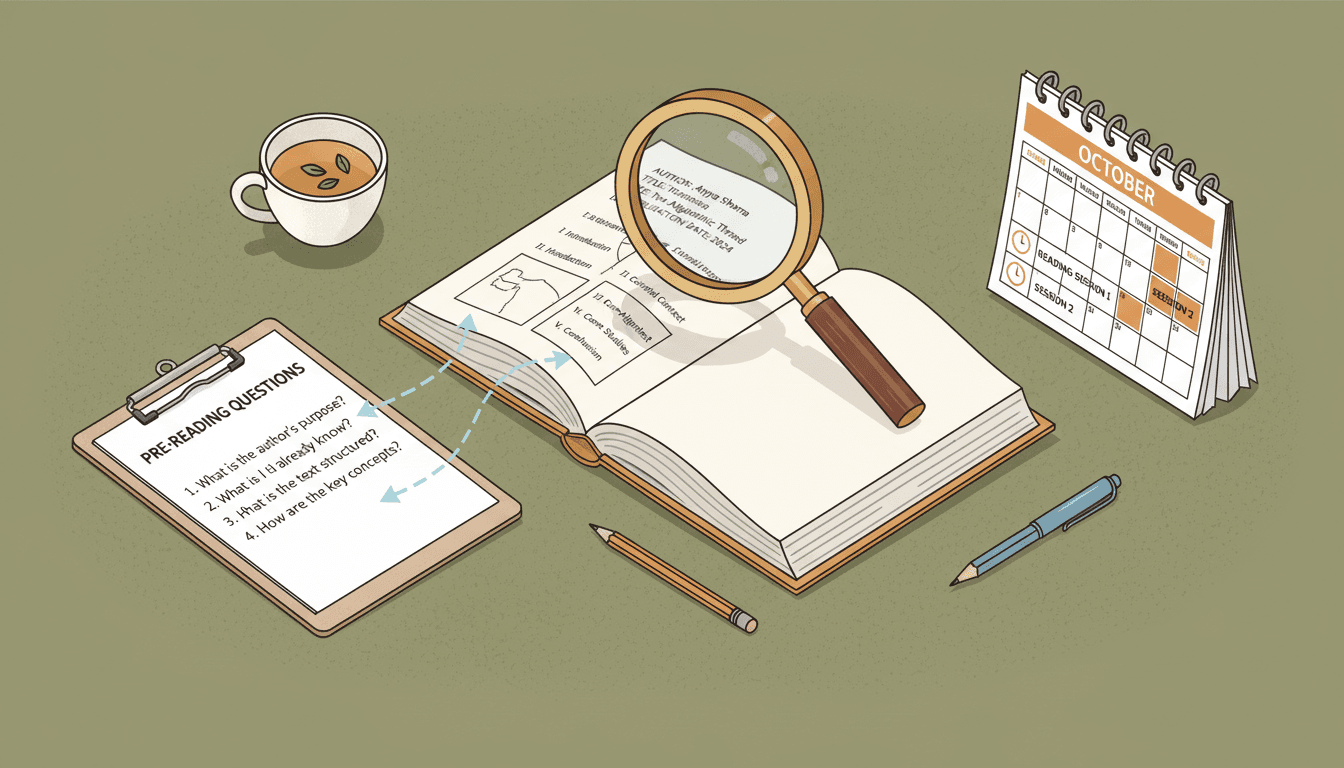
Phase 1: Preparation and Reconnaissance
- Define your objective: background scan, quote mining, or a full argument autopsy.
- Collect metadata: author credentials, publication date, publisher credibility.
- Let Readever’s pre-reading dialogue supply three contrasting summaries so you start with multiple frames.
- Skim for architecture—titles, introductions, signposted claims—and translate them into questions.
Phase 2: Active Engagement and Annotation
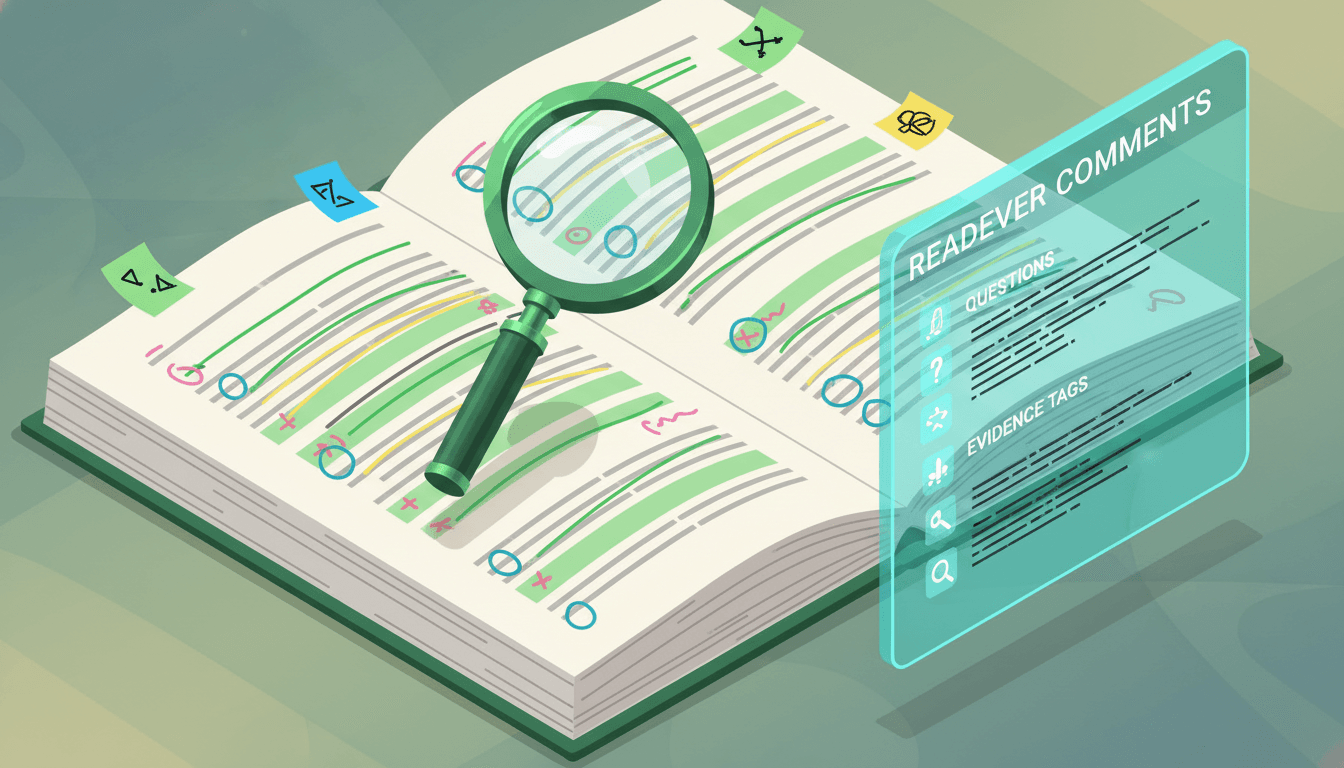
- Slow down. Critical reading is deliberate; use Readever to chunk the text and set pace targets.
- Annotate in layers: highlight claims, tag evidence, and pin margin questions. Readever templates make it easy to color-code claims vs. counterpoints.
- Run mini fact-checks the moment doubt appears—Readever’s inline web search lets you verify data without breaking flow.
Phase 3: Synthesis and Judgment
- Summarize the thesis, supporting claims, and evidence in your own words. Readever’s auto-outline condenses your annotations into bullet-ready notes.
- Evaluate logic: identify missing warrants, cherry-picked data, or fallacies.
- Archive a final verdict with tags for “reliable,” “debatable,” and “needs follow-up,” so future you knows why this text matters.
Interrogate Every Argument Like an Editor
Use this checklist each time you meet a bold claim:
- Source: Who wrote this and why should I trust them? What is the publication’s agenda?
- Claims: What is the thesis? Which sub-claims scaffold it?
- Evidence: Are the data credible, timely, and relevant? Does the author cite primary sources?
- Assumptions: What unstated beliefs bridge the evidence and conclusion?
- Rhetoric: How do tone, metaphors, or emotional appeals steer my reaction? Are they transparent or manipulative?
Manage Bias Before It Manages You
Bias is the hidden saboteur of critical reading. Build countermeasures into your workflow:
- Name the bias you feel (confirmation, anchoring, availability) right inside Readever’s reflection panel.
- Steelman dissent. Ask the AI assistant to construct the strongest opposing argument, then compare it with your notes.
- Invite friction. Share your annotated bundle with a reading partner and ask them to challenge your verdict.
🌱 Craving deeper bias-busting reads?
Launch the Bias-Aware Reader Bundle — Readever will surface cognitive traps and fact-check prompts before every session.
Where Critical Reading Pays Off
- Academia: Isolate research gaps faster, and write literature reviews that analyze rather than summarize.
- Professional life: Vet market reports, legal clauses, or UX research with a clear chain of evidence.
- Media literacy: Spot agenda-driven framing, reverse-image-search visuals, and lateral-read contentious stats before sharing.
Practice Lab: Daily Readever Workflows
- Morning Recon (10 minutes): Queue a chapter, run the pre-reading dialogue, and jot three guiding questions.
- Focused Sprint (25 minutes): Read and annotate in Readever’s focus mode; tag every claim with evidence status.
- Synthesis Pulse (15 minutes): Export the AI-generated outline, add your verdict, and schedule a bias reflection reminder.
- Weekly Remix: Combine two texts on the same topic, let Readever highlight contradictions, then write a comparative insight note.
📚 Ready to turn practice into mastery?
Build Your Critical Reading Habit Playlist — The pre-reading dialogue will queue fresh critical opinions every time you reopen the shelf.
FAQ
How can I start reading critically if I only have 20 minutes a day?
Break sessions into the three phases: a five-minute pre-read with Readever’s dialogue, a 10-minute close read with two annotations, and a five-minute synthesis note. Consistency beats marathon sessions.
What should I do when a text is packed with unfamiliar theory?
Tag confusing passages, let Readever fetch concise explainer cards, and pause to build a mini glossary before proceeding. Critical reading allows strategic detours.
How does Readever help me avoid confirmation bias?
The pre-reading dialogue automatically supplies competing viewpoints, while the bias reflection panel nudges you to log reactions. Share your annotated bundle to invite external critique.
Do I need to annotate every page?
Focus on the argument’s load-bearing paragraphs: thesis statements, evidence clusters, and counterarguments. Readever’s heat map highlights the most referenced sections so you can annotate where it counts.
Can I apply these tactics to podcasts and videos?
Yes. Import transcripts into Readever, run the same three-phase workflow, and treat time-stamped clips as evidence. Critical reading becomes critical viewing.