🎯 Want to understand humanity's journey with FREE AI-powered reading assistance?
Read Sapiens for FREE at www.readever.app - Explore the three revolutions that shaped human destiny with advanced AI reading comprehension tools that help you grasp complex historical concepts, connect patterns across millennia, and understand how shared myths built civilizations. Perfect for transformative historical thinking!
From Insignificant Apes to Global Rulers
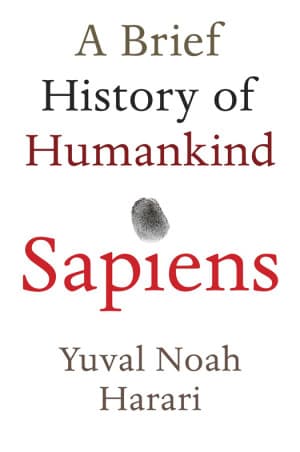
70,000 years ago, Homo sapiens was just another species of ape, barely surviving in a corner of Africa. Today, we dominate the planet. What happened in between? Yuval Noah Harari's Sapiens answers this question through three revolutionary moments that reshaped not just our species, but the entire planet.
This isn't just history—it's the story of how we became human. And understanding these three revolutions is essential to understanding who we are today.
The Cognitive Revolution: The Birth of Shared Myths
70,000 years ago, something changed in our brains. Harari calls it the Cognitive Revolution, and it was the moment everything changed.
What Made It Revolutionary?
Before the Cognitive Revolution, humans could only communicate about reality—"there's a lion by the river." But suddenly, we could talk about things that don't exist: gods, nations, money, human rights, corporations. We could create and believe in shared fictions.
"Imagined reality," Harari explains, "is not lies. We can distinguish between lies and imagined realities. The latter enables millions of strangers to cooperate successfully by believing in common myths."
The Power of Shared Stories
Think about it: A chimpanzee can't convince thousands of other chimps to build a pyramid by promising them eternal bananas. But humans can convince millions to build cathedrals, wage wars, or develop technology—all through shared beliefs in things that exist only in our collective imagination.
This ability to believe in shared fictions is what made large-scale human cooperation possible. It's why you can trust strangers with your money (belief in banking systems), why people die for their countries (belief in nations), and why we have global corporations (belief in legal fictions).
The Agricultural Revolution: History's Biggest Fraud?
10,000 years ago, humans began farming. We called it progress, but Harari challenges this assumption with a provocative question: Was agriculture actually a step backward?
The Paradox of Progress
The Agricultural Revolution certainly increased the human population dramatically, but individual lives may have become worse:
- Nutrition declined: Early farmers ate fewer varied foods than hunter-gatherers
- Disease increased: Settled life created breeding grounds for epidemics
- Labor intensified: Farming required more work hours than foraging
- Hierarchy emerged: Surplus created social inequality and class systems
"The Agricultural Revolution was history's biggest fraud," Harari argues. "It was a trap that ensnared millions of humans in a cycle of endless toil."
Why Did We Fall for It?
Once humans started farming, there was no going back. Population growth made returning to hunting impossible. We were trapped by our own success.
More importantly, agriculture enabled the emergence of elites, kings, and organized states—systems that benefited small groups at the expense of the majority. But those groups controlled the narrative, calling it "progress."
The Scientific Revolution: Admitting Ignorance
500 years ago, European culture began admitting "we don't know." This admission, according to Harari, was the foundation of the Scientific Revolution.
The Power of Not Knowing
For millennia, traditional systems claimed to have all the answers. Science revolutionized this by embracing ignorance. The scientific method's power comes from acknowledging what we don't know, then systematically investigating those gaps.
This mindset, combined with European imperialism and capitalism, unleashed unprecedented technological and economic growth. The marriage of science, military conquest, and economic expansion transformed the world.
The Three Unifying Forces
Harari identifies three forces that unified humanity globally:
- Money: The ultimate system of mutual trust, allowing strangers to cooperate
- Imperialism: The political unification of humankind (though through conquest)
- Religion: The superhuman order that explains and legitimizes social norms
Living in Dual Realities
Harari's most profound insight is that humans live in dual realities:
- Objective reality: Trees, rivers, lions, the physical world
- Imagined reality: Gods, nations, money, laws, human rights
Every dollar bill, every passport, every marriage certificate—these are fictions we collectively agree to believe in. But these imaginary structures have very real power to shape our world.
Are We Happier?
Despite our incredible achievements, Harari poses uncomfortable questions: Are we happier than our hunter-gatherer ancestors? Has all this progress actually improved human well-being?
The answer isn't clear. Happiness research suggests that once basic needs are met, additional wealth and comfort don't significantly increase happiness. We may have conquered the world at the cost of our individual contentment.
Why Sapiens Matters Today
Understanding these three revolutions is crucial for navigating our current moment:
The Cognitive Legacy
Our ability to create and believe in shared stories now powers everything from social media to artificial intelligence. The same mental tools that built early religions now build tech empires and political movements.
The Agricultural Warning
The "progress trap" of agriculture—societal advances that harm individual well-being—repeats in modern forms. We're again asking whether technological "progress" actually serves human flourishing.
The Scientific Challenge
Science gave us unprecedented power, but that power now threatens our survival through climate change, nuclear weapons, and AI. The same drive to expand and control that built civilization may now destroy it.
Reading Sapiens with AI
Sapiens is dense with sweeping historical claims and provocative ideas. Reading it with an AI companion helps you:
- Connect patterns across 70,000 years of history
- Question assumptions about progress and civilization
- Explore counterarguments to Harari's bold claims
- Understand implications for today's technological challenges
The AI helps you grasp the big picture while spotting the nuances that make this book so thought-provoking.
The Three Revolutions in Your Life
Understanding these revolutions changes how you see everything:
- Your job is part of an economic system built on imagined fictions like "corporations" and "careers"
- Your nation is a shared story that enables millions to cooperate
- Your money has value only because we collectively believe it does
- Your identity is shaped by imagined orders you may not even recognize
Want to dive deeper into these revolutionary ideas? Download Readever and explore Sapiens with AI-powered insights that illuminate the patterns of human history and their relevance to your life.
The story of how we became human is also the story of how we might become something else entirely. The next revolution is already beginning—will you understand it in time?
What do you think about Harari's three revolutions? Have they changed how you see human progress? Share your thoughts and join the conversation about the patterns that shaped our species.