🎯 Ready to benchmark your path to F-You Money with AI assistance?
Read The Simple Path to Wealth, The Psychology of Money, and The Bogleheads' Guide to Investing FREE on www.readever.app – Capture automated highlights, savings rate dashboards, and stay-the-course nudges while you read.
Why JL Collins Built a Simpler Operating System for Wealth
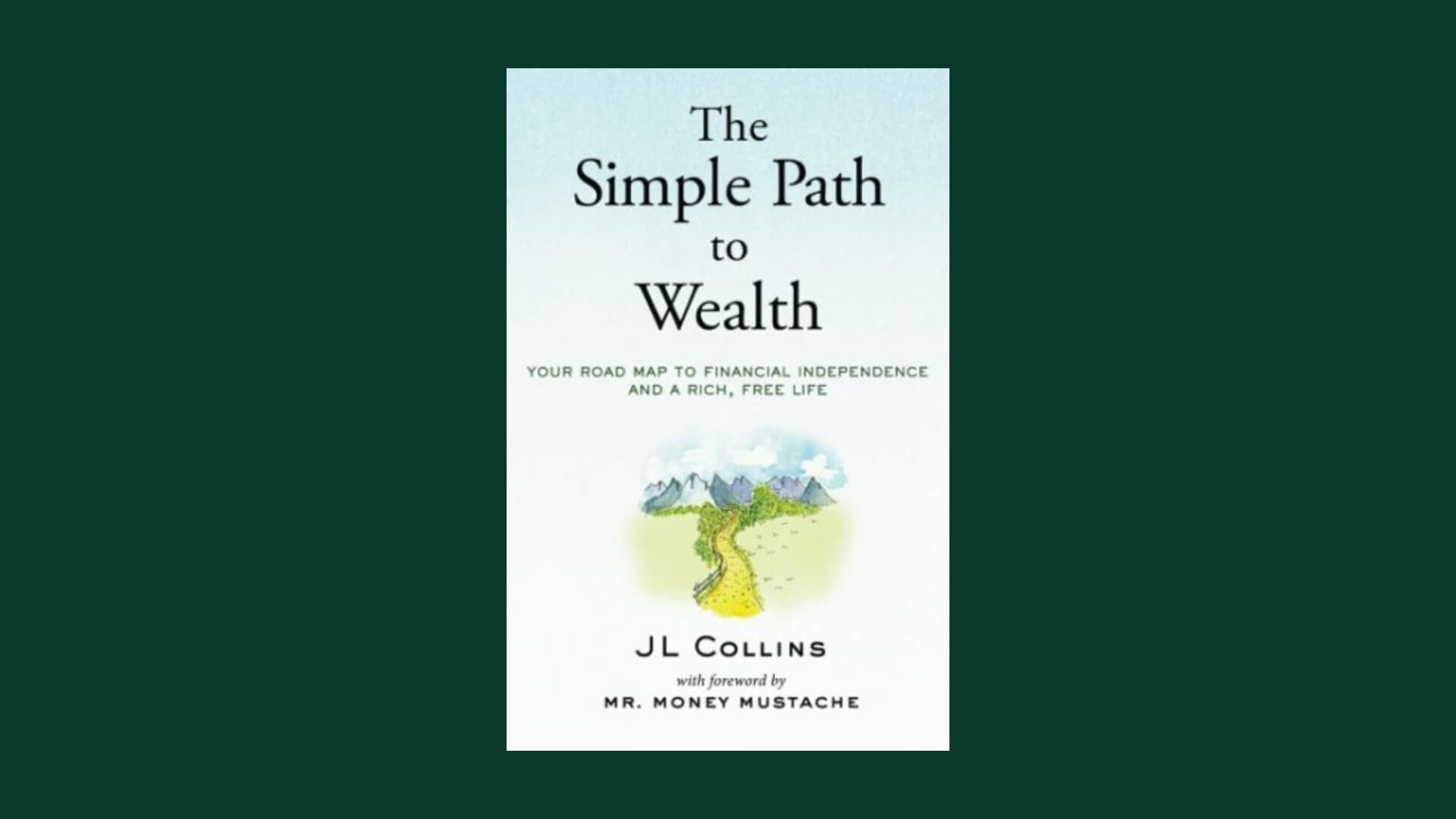
The Simple Path to Wealth began as letters to Collins’s daughter and evolved into a canonical FIRE manual. Its radical claim: Wall Street’s complexity is a marketing trick. A single low-cost index fund, a sky-high savings rate, and relentless discipline outperform the fee-heavy, anxiety-inducing products sold by financial middlemen.
The book reframes money as a tool for autonomy. By focusing on “F-You Money”—the capital that lets you walk away from anything misaligned—you replace vague retirement goals with immediate agency.
Foundational Philosophy: Spend Less, Invest the Surplus, Avoid Debt
1. Treat Debt as a Crisis, Not a Lifestyle
Debt destroys compounding. Collins insists you eradicate high-interest liabilities before investing seriously. The opportunity cost lens forces every borrowing decision to compete against the stock market’s long-term potential.
2. Reframe Money as a Compounding Engine
Every dollar saved is a worker you deploy forever. This mental shift reframes “frugality” as buying future freedom, not sacrificing current happiness.
3. Define and Chase F-You Money
Calculate the point where work becomes optional. Each contribution to your portfolio buys back a slice of your time, turning a distant retirement dream into a present-tense power move.
The Accumulation Engine: Tactical Blueprint for Builders
Push the Savings Rate to Warp Speed
Collins champions a 50% savings rate. Aggressive? Yes—and transformational. Saving aggressively both heaps capital into markets and trains you to live on less, shrinking your FI target (25× annual expenses).
Deploy the One-Fund Portfolio (VTSAX / VTI)
- Broad diversification: Own the entire U.S. market in one fund.
- Ultra-low cost: Expense ratios measured in basis points, not percentages.
- Historical edge: Passive total-market exposure has beaten most active managers once fees are considered.

Prioritize Debt Payoff by Interest Rate
| Debt APR | Collins’s Move | Rationale |
|---|---|---|
| > 5% | Pay off immediately | Guaranteed better-than-market return |
| 3–5% | Choose based on comfort | Mathematical wash; psychological call |
| < 3% | Pay minimums, invest surplus | Market’s expected return dwarfs cost |
This math-first framework contrasts with behavior-first approaches like Dave Ramsey’s snowball. Pair it with the automation tactics in An Analytical Guide to I Will Teach You to Be Rich if you’re building systems that enforce the rules for you.
Stay the Course: Navigating Volatility and Behavior
Bear markets aren’t bugs—they’re features. Collins calls crashes “a gift” because every dollar invested during a downturn buys more shares. The playbook:
- Expect portfolio drops of 50%.
- Keep contributions automated regardless of headlines.
- Remember the meta-rule: over any 20-year span, U.S. markets have historically trended upward.
This disciplined consistency arbitrages other investors’ fear and greed—exactly what we explored in An Expert’s Companion to The Psychology of Money.
The Preservation Stage: Rebalancing for Sustainable Freedom
When paychecks stop, shift from 100% stock to a two-fund mix—typically 75–80% VTSAX/VTI, 20–25% VBTLX/BND. Bonds exist to dampen volatility and fund withdrawals when equities swoon, protecting you from sequence-of-returns risk.
The 4% Rule (and Its Modifiers)
- Classic guidance: withdraw 4% in year one, adjust for inflation thereafter.
- Collins argues it’s conservative; modern critics prefer 3–3.5%.
- Dynamic guardrail methods tweak withdrawals within set bands for added resilience.

Calculate Your FI Number in One Line
Annual expenses × 25 = portfolio target. Cutting $1,000 of yearly spend slashes $25,000 off your FI goal—a potent incentive to keep lifestyle inflation in check.
Critical Perspectives and Comparative Context
The International Diversification Debate
- Collins: U.S. multinationals provide global exposure; simplicity beats theoretical optimization.
- Critics: Home-country bias is real; international funds lower correlation and mitigate “lost decade” risk.
- Analyst Take: Consider a “Simple Path Plus”—add a single total international fund (e.g., VXUS) at 20–30% for global ballast without sacrificing simplicity.
Bogleheads vs. Collins
Both favor low-cost passive investing. Bogleheads typically recommend a three-fund portfolio (U.S. stocks, international stocks, bonds). Collins trims it to one or two funds to minimize tinkering risk.
Post-Ramsey Upgrade Path
Ramsey’s Baby Steps help you escape debt; Collins’s framework accelerates wealth once you have discipline. Many readers “graduate” from Ramsey to Collins when they’re ready to leverage math over moral rules.
Action Playbook: Two Implementation Options
- Purist Path: 100% VTSAX/VTI during accumulation, shift to 80/20 with VBTLX/BND in preservation. Maximum simplicity, maximum behavioral durability.
- Simple Path Plus: 70–80% U.S. total market, 20–30% international total market during accumulation. Preserve the ethos while adding diversification insurance.
Reflection Prompts for Deep Reading
- How close are you to your F-You Money number today?
- What savings rate feels ambitious but doable for the next 12 months?
- Which expense would reduce your FI number the most if cut permanently?
- How will you inoculate yourself against panic during the next 30% drawdown?
- When will you introduce bonds, and what triggers that shift?
Related Reading
- An Expert's Companion to The Psychology of Money – Strengthen the mindset that keeps you invested when volatility strikes.
- An Analytical Guide to I Will Teach You to Be Rich – Bolt Collins’s simplicity onto automated cashflows and Big Win income tactics.
FAQs
How do I hit a 50% savings rate without a huge salary?
Start with debt elimination, housing optimization, and “big win” savings. Incremental raises and windfalls go straight into automation. Track progress with AI reminders inside Readever.
Do I have to use Vanguard?
No. Fidelity’s FSKAX/FXAIX or Schwab’s SWTSX/SCHB are comparable. Collins favors Vanguard for its investor-owned structure, but the principle is low-cost total-market exposure.
Is a U.S.-only portfolio reckless?
It’s a calculated trade-off. If home-country bias worries you, adopt the Simple Path Plus allocation. The key is to decide once and automate it.
How do I weather a market crash emotionally?
Pre-write your downside playbook: list your savings rate, FI number, and why future you needs those shares. Schedule automated check-ins (quarterly) to confirm you’re still following the plan.
What if my expenses spike (kids, caregiving)?
Temporarily reduce contributions but keep the automation pipeline intact. Revisit your FI number after the season passes and adjust targets accordingly.
🚀 Want Simple Path guardrails delivered on autopilot?
Queue The Simple Path to Wealth in Readever – The AI companion will tag savings milestones, surface ladder reminders, and keep you disciplined when volatility tests your resolve.