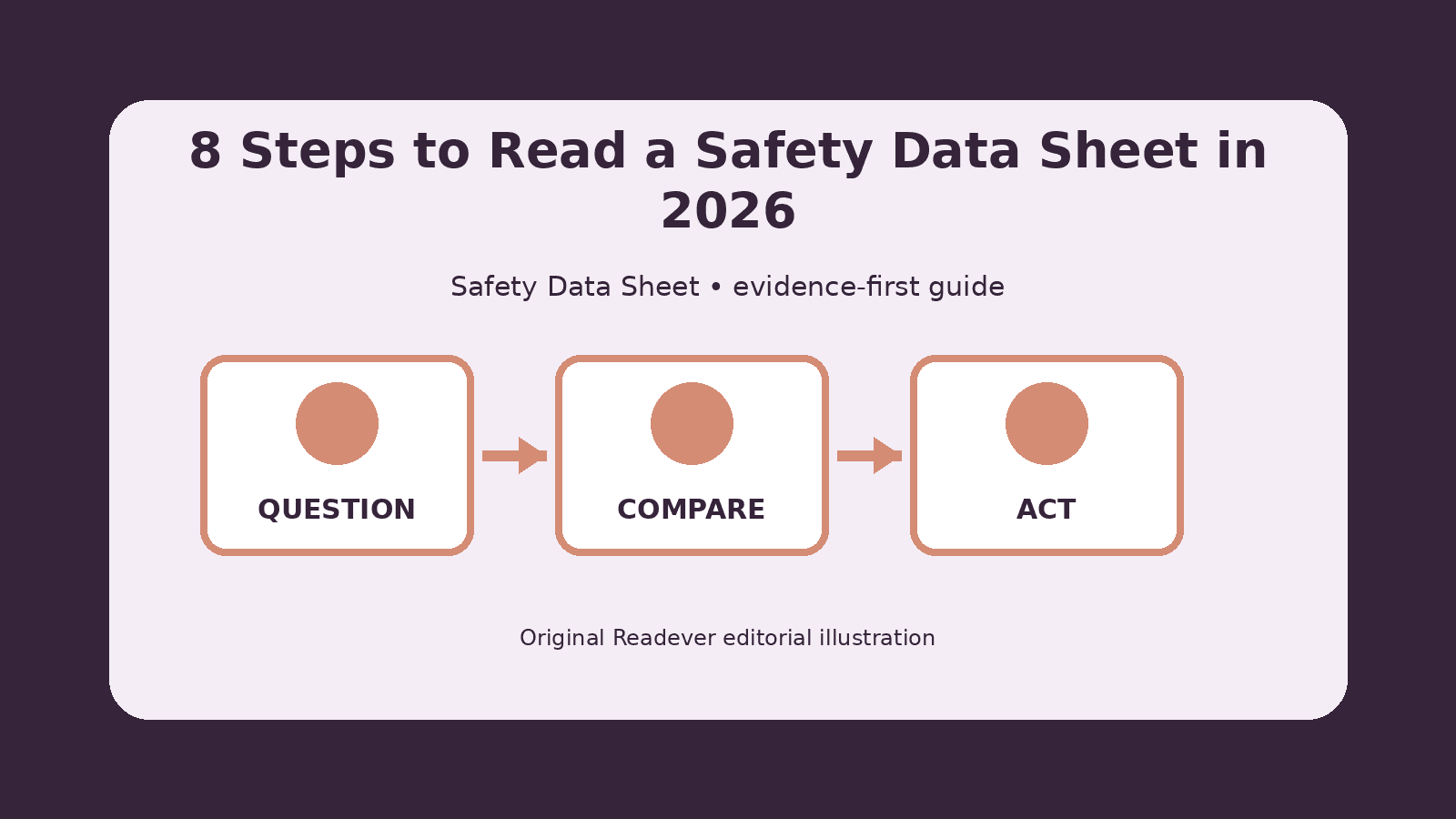
A safety data sheet is a structured hazard-communication document, not a substitute for training, a site procedure, or professional emergency advice. Read it before handling the product so hazards, protective measures, incompatibilities, and response steps are understood under the actual conditions of use.
🎯 Want to read safety and failure books for FREE with AI-powered assistance?
Open the Safety and Failure Prevention book list in Readever — Read The Checklist Manifesto, To Engineer Is Human, and The Design of Everyday Things while connecting hazards, controls, and operating conditions to source evidence.
Confirm product and supplier identity
Match the product name, manufacturer, revision date, recommended use, and emergency contact to the container and purchasing record. Similar trade names can describe different formulations. If the label, batch, or concentration does not match, stop and resolve the discrepancy rather than borrowing controls from a different chemical.
Read the hazard summary with context
Review classification, signal word, pictograms, hazard statements, and precautionary statements. Distinguish acute effects from chronic risks and physical hazards from health hazards. Classification communicates categories; it does not calculate the exact risk for your amount, process, ventilation, temperature, or route of exposure.
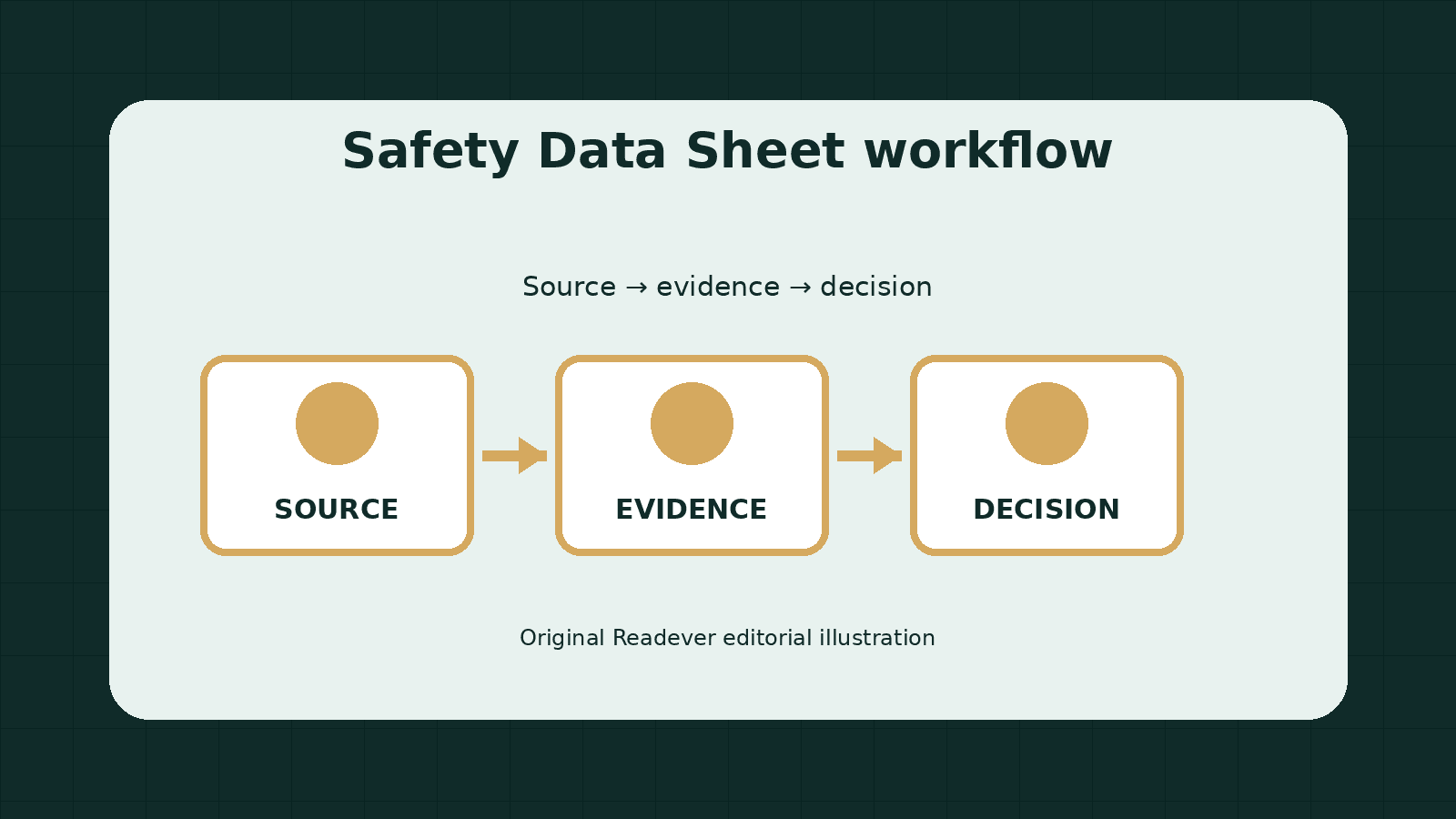
Connect composition to exposure routes
Use the ingredient and exposure sections to identify relevant substances, concentration ranges, occupational limits, and likely inhalation, skin, eye, or ingestion pathways. Note when proprietary ranges limit precision. Consider dust, aerosol, vapor, heated material, and decomposition products created by the task rather than only the unopened product.
Select controls in the proper order
Start with elimination, substitution, closed systems, local exhaust, and work practices before relying on personal protective equipment. Verify glove material, breakthrough time, respirator requirements, eye protection, and protective clothing against the process. Generic PPE language may require a site-specific assessment by a qualified person.
Plan storage, incompatibility, and disposal
Check temperature, ventilation, container, segregation, grounding, moisture, light, and incompatible-material requirements. Compare them with nearby chemicals and waste streams. Disposal instructions must be reconciled with local rules and facility procedures; never assume that dilution, evaporation, or drain disposal is acceptable.
Prepare for spills, fire, and first aid
Locate first-aid measures, suitable extinguishing media, hazardous combustion products, spill precautions, and emergency equipment before work starts. Translate the sheet into site actions, contact numbers, and evacuation or containment boundaries. During an incident, follow trained emergency procedures and contact appropriate professionals rather than improvising from a summary.
Verify transport and regulatory information
Review transport classification, environmental precautions, and regulatory listings for the exact product and jurisdiction. Confirm whether quantity, package type, concentration, or mode of transport changes the requirements. Treat these sections as inputs to trained compliance review, because an SDS may not contain every rule that applies to a specific shipment, workplace, or waste stream.
Turn the sheet into a task-specific briefing
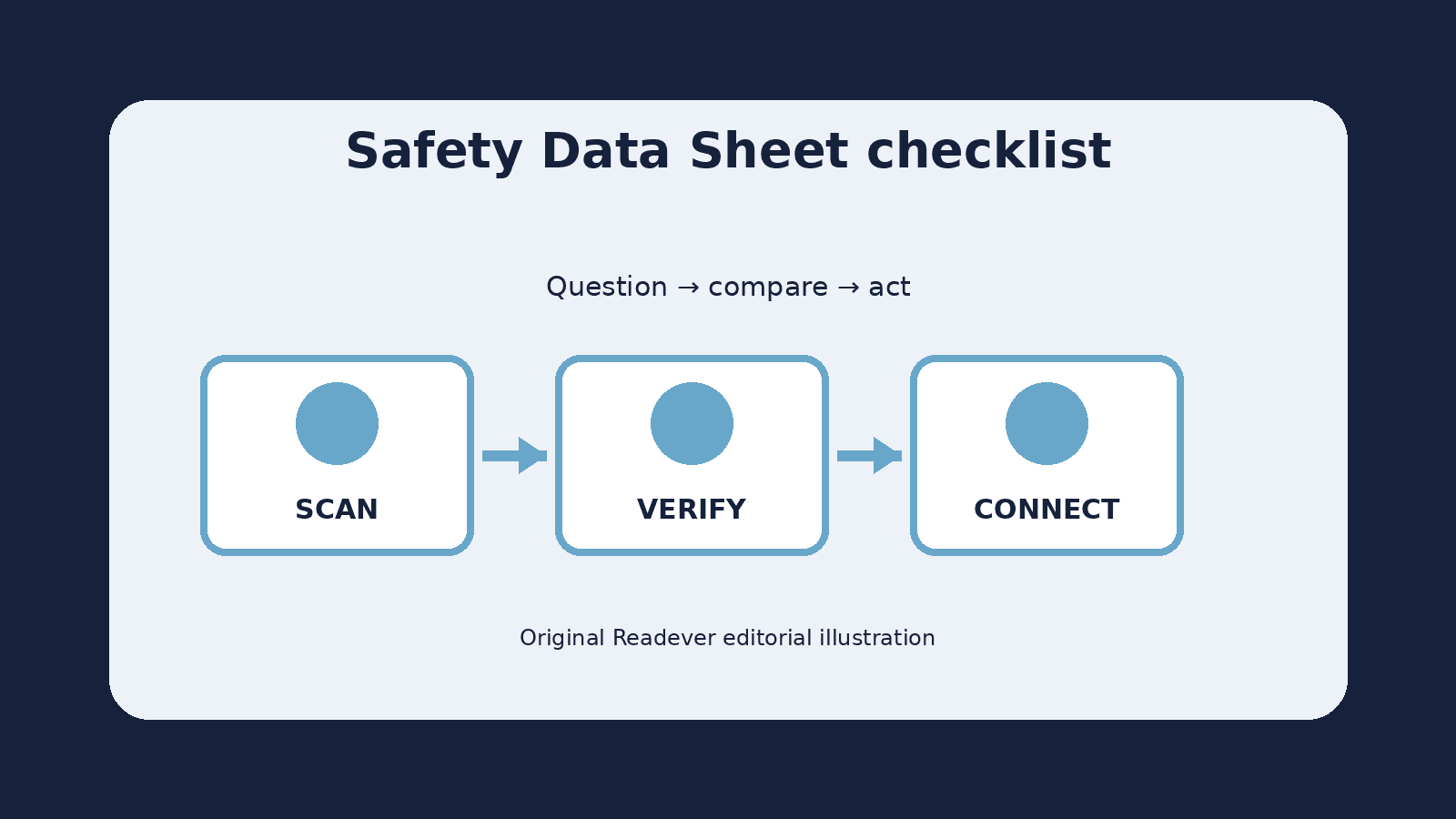
Record the product identifier, intended task, exposure routes, controls, emergency actions, storage conditions, and unresolved questions in a concise pre-work note. Link each instruction back to the relevant SDS section and the site's current procedures. Stop and seek qualified review when the sheet is outdated, incomplete, inconsistent with the label, or insufficient for the planned conditions.
Mid-reading checkpoint: Use Readever’s AI reading assistant to compare the document’s key claims with its hazard-control evidence, while keeping interpretation separate from quoted evidence.
Frequently Asked Questions
Can AI replace the original material for workplace chemical safety literacy?
No. In workplace chemical safety literacy, use AI to organize comparisons and surface missing context, then verify every consequential claim against the cited original. Preserve the document date, scope, definitions, and uncertainty because those details determine whether an interpretation is defensible.
What belongs in an auditable workplace chemical safety literacy note?
Save the exact source and version, the decision or question being answered, relevant evidence, limitations, unresolved conflicts, and your reasoning. A reader should be able to reconstruct the workplace chemical safety literacy conclusion without depending on an assistant transcript.
What should I verify before relying on this safety data sheet?
Confirm the publisher, date, scope, definitions, revision status, and intended audience. Then trace each consequential conclusion to the supporting hazard-control evidence and record any missing context or unresolved conflict.
How can Readever help without replacing source review?
Readever can organize sections, connect notes to passages, and surface inconsistent terminology. The reader still checks the original document, validates calculations or claims, and decides whether specialist review is required.
Put the Reading Into Practice
Open the material in Readever and create a section map tailored to workplace chemical safety literacy. Attach each important claim to its supporting passage, label interpretation separately from direct evidence, and keep the page-specific questions visible until they are resolved by an authoritative source or qualified reviewer.