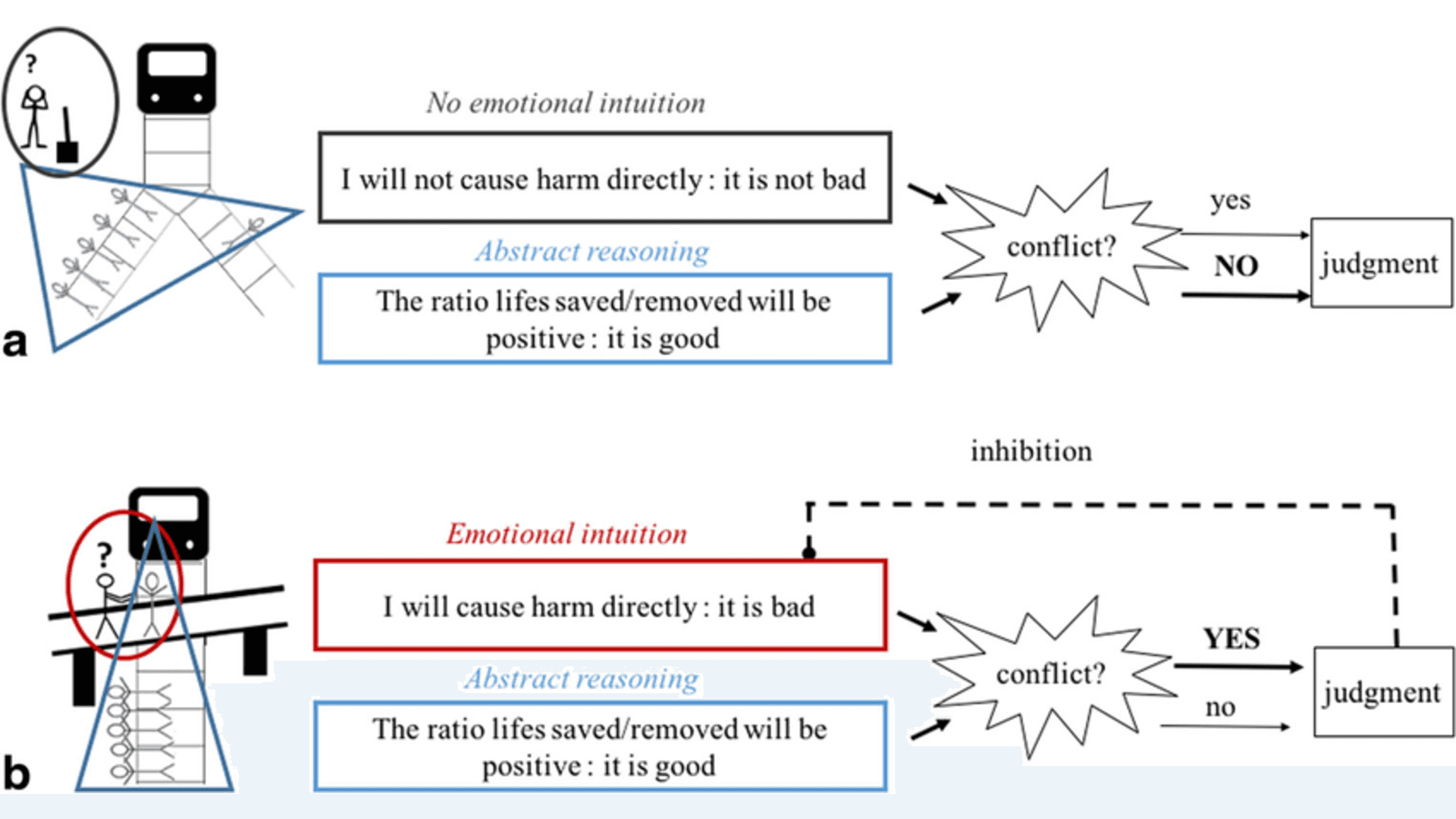
The best book is the one that answers the question you actually have. This guide is for general readers who want multiple evidence-informed lenses on behavior without reducing people to a single theory. It favors useful differences over a generic ranking, so the order below is a reading path rather than a claim that one title is universally best.
How these books were selected
Selections cover cognition, persuasion, beliefs, habits, optimal experience, attachment, neurology, and trauma. Every title has a live Readever page. Inclusion does not mean every claim is uncontested; readers should distinguish research summaries, clinical narratives, and practical frameworks.
How to use this list
Do not try to read every title in sequence. Name the decision or problem you face, choose the book whose lens matches it, and keep a one-page reading note with three fields: claim, evidence or example, and action or question. After two chapters, decide whether to continue, switch to another lens, or test one idea in practice.
The books
1. Thinking, Fast and Slow
A foundational route into judgment and decision-making. Read it to notice how intuitive and deliberate thinking can produce different strengths and errors. Do not use the labels as a way to call other people irrational; apply the questions to your own decisions first.
2. Influence
Best for understanding recurring patterns in persuasion and compliance. Its practical value is defensive as well as persuasive: identify the cue being used, slow down, and ask whether the request still makes sense without the social pressure around it.
3. Mindset
A focused introduction to beliefs about ability and learning. Use it to examine how praise, goals, and responses to difficulty shape behavior. Avoid turning “growth mindset” into forced optimism; effort matters most when paired with strategy, feedback, and opportunity.
4. The Power of Habit
A readable framework for noticing cues, routines, and rewards. It fits readers who want to observe repeated behavior without assuming that insight alone guarantees change. Choose one small routine and collect evidence before redesigning it.
5. Flow
A useful lens on deep engagement, challenge, skill, goals, and feedback. Read it if your question is not “Why do people make mistakes?” but “When does attention become fully absorbed?” Keep structural constraints in view; not every task can be redesigned by willpower.
6. Attached
An accessible relationship-focused framework. Its categories can help readers name patterns, but they should not become permanent diagnoses or excuses for harmful conduct. Use the book to generate better questions about needs and communication.
7. The Man Who Mistook His Wife for a Hat
Clinical narratives that reveal how perception, memory, identity, and neurological difference complicate ordinary assumptions about the mind. Read for humility and observation, not for self-diagnosis or amateur diagnosis of others.
8. The Body Keeps the Score
A trauma-focused book that many readers encounter while trying to connect body, memory, and recovery. Because the subject is clinical and can be distressing, read critically and seek qualified professional support for personal treatment decisions. This list is educational, not medical advice.
A simple reading path
- Choose one question. Write the question at the top of your note before opening the book.
- Preview before committing. Review the Readever title page, identify the book’s main problem, and choose one chapter or section to test.
- Interrogate, do not merely collect. Record what the author claims, what supports it, and what would change your mind.
- Compare lenses. When two books address the same issue differently, preserve the disagreement instead of blending both into a vague summary.
- Turn one idea into an observable action. A useful reading outcome is specific enough to revisit after a week.
For more catalog exploration, browse the Psychology category and the book-lists hub. To work through a difficult passage, use Readever’s reading workflow. A related next step is Thinking Fast And Slow Guide 2025.
Start reading with a question, not a quota
Open the title page that best matches your present goal, save the question you want the book to answer, and read far enough to test whether its framework is useful. Readever can help you keep the book, your questions, and your notes in one reading workflow.
CTA: Explore books on Readever
Build a balanced sequence instead of collecting isolated facts
A list about human behavior can become misleading if every book is treated as a rival theory of everything. These titles work better as lenses aimed at different scales. Thinking, Fast and Slow and Influence examine judgment and persuasion. Mindset and The Power of Habit look at beliefs and repeated behavior. Flow focuses on the conditions of absorbed attention. Attached offers a popular framework for relationship patterns. Oliver Sacks writes from neurological case histories, while The Body Keeps the Score addresses trauma and the body. The questions overlap, but the evidence and appropriate uses are not interchangeable.
For a first pass, read one book from each of three layers: decision, practice, and lived experience. A useful sequence is Thinking, Fast and Slow, then The Power of Habit, then The Man Who Mistook His Wife for a Hat. That route moves from a broad model of judgment to behavior change and finally to individual cases that resist neat generalization. If your interest is relationships, substitute Attached for the habit book. If your interest is sustained attention, choose Flow.
How to evaluate a psychology claim while you read
Psychology books often make a difficult translation: they turn experiments, clinical observations, interviews, and theory into a story a general reader can remember. The story is useful, but it can hide the distance between the evidence and the conclusion. Use four checks.
First, identify the evidence type. A laboratory task, a survey, a clinical case, and a longitudinal study answer different questions. Do not assume that a vivid case estimates how common a pattern is. Do not assume that a statistically average effect predicts one person with certainty.
Second, record the population. Who participated, in what setting, during which period? A finding based on students in a controlled task may generate a valuable hypothesis without establishing a universal law of behavior.
Third, separate description from prescription. A book may accurately describe a tendency and still offer an intervention that has not been tested to the same standard. Mark where the author moves from “people often do this” to “therefore you should do that.”
Fourth, look for boundary conditions. Ask when the framework should not be applied. Fast judgment can reflect expertise or bias. Persistence can support learning or prolong a bad strategy. A relationship label can clarify a pattern or flatten a complicated person. A useful model becomes safer when its limits remain visible.
A note system for comparing the eight books
Create one note per claim rather than one enormous summary per book. Include the claim in your own words, the evidence used, the context, one limitation, and a practical implication that does not exceed the evidence. Then link claims across books.
For example, connect Thinking, Fast and Slow to Influence around automatic responses, but distinguish internal judgment from social persuasion. Connect Mindset to The Power of Habit around change, but separate beliefs about ability from environmental cues and routines. Connect Flow to habit research around attention, while noting that an optimal experience is not simply a repeated behavior. These contrasts are more educational than a list of favorite quotations.
When a claim matters for health, therapy, education, employment, or a high-stakes relationship decision, consult qualified guidance and current primary evidence. These books can help readers form better questions; they should not be used to diagnose oneself or another person.
Three reading tracks
For decisions and persuasion
Read Thinking, Fast and Slow followed by Influence. Keep a decision journal for one week. Record an initial judgment before checking additional evidence, and note when framing, authority, scarcity, familiarity, or social proof may have shaped the choice. The goal is not to distrust every intuition. It is to notice which situations deserve a slower check.
For behavior and attention
Read Mindset, The Power of Habit, and Flow. Compare the role each book gives to beliefs, cues, feedback, difficulty, and skill. Test one small change for two weeks, but write down the environment and outcome so that a satisfying story is not mistaken for proof.
For relationships, brains, and bodies
Read Attached, The Man Who Mistook His Wife for a Hat, and The Body Keeps the Score slowly. Avoid turning categories or case histories into labels for people you know. Note the author’s professional context, the evidence behind a claim, and where newer research or clinical guidance may be needed.
Frequently asked questions
What is the best psychology book for a complete beginner?
Start with Thinking, Fast and Slow if you want a broad vocabulary for judgment, or The Power of Habit if you want a narrower, more immediately practical topic. Neither book is a complete introduction to academic psychology, so pair general-interest reading with current textbooks or primary research when depth matters.
Which book is best for understanding other people?
Influence is useful for social persuasion, while Attached focuses on a popular relationship framework. Use either to generate questions, not to assign fixed labels or claim access to another person’s motives.
Are popular psychology books scientifically reliable?
Reliability varies by claim, evidence type, edition, and subsequent research. Check citations, look for replications and reviews, and distinguish a memorable explanatory framework from a settled scientific consensus.
Can these books replace therapy or medical advice?
No. They are educational reading, not diagnosis or treatment. Seek a qualified professional for mental-health, neurological, trauma-related, or medical concerns.
Choose one question and begin
Pick the title that best matches the behavior you want to understand, write a single question before opening it, and keep evidence, interpretation, and application in separate notes. Browse psychology books on Readever and return to this guide when you are ready to add a second lens.