Economics becomes easier to learn when you stop treating it as one giant subject. A beginner needs several lenses: how incentives shape ordinary choices, how people depart from idealized rationality, why poverty persists, how institutions affect prosperity, how markets coordinate activity, why wealth accumulates unevenly, and how alternative frameworks redefine success.
The eight books below create that path. They are not ranked by prestige or sales. Each book earns a place because it answers a different beginner question and has a verified live Readever book page. You can read the full sequence or choose a track based on the issue you want to understand.
This is an educational reading list, not financial, investment, tax, legal, or policy advice. Economic books contain arguments, models, historical interpretations, and value judgments that should be compared rather than accepted automatically.
How this beginner economics list was selected
The list uses four criteria:
- A clear entry question. Each book gives a beginner a manageable problem to investigate.
- Coverage across levels. The sequence moves from individual decisions to markets, institutions, countries, wealth, and planetary limits.
- Productive disagreement. The books do not form a single school of thought; they invite comparison.
- Catalog verification. Every title linked below returned HTTP 200, appeared in Readever’s English sitemap, and exposed a self-referencing canonical when checked on August 18, 2026.
The descriptions are original editorial orientation. They are not substitutes for the books and do not reproduce restricted passages, proprietary summaries, ratings, or reviews.
1. The Undercover Economist by Tim Harford
Best first book for: seeing economic mechanisms in everyday life
The Undercover Economist is a practical starting point because it trains you to look beneath familiar prices and transactions. Read it to ask why a cup of coffee costs what it does, how scarcity changes bargaining power, why information can be unevenly distributed, and when a market outcome reflects hidden constraints.
Do not turn every example into a universal law. Instead, practice naming the mechanism, the parties involved, the alternatives available to them, and what evidence would show that a different explanation fits better.
Reading question: Who has options in this exchange, and who does not?
2. Thinking, Fast and Slow by Daniel Kahneman
Best for: understanding the behavioral assumptions behind decisions
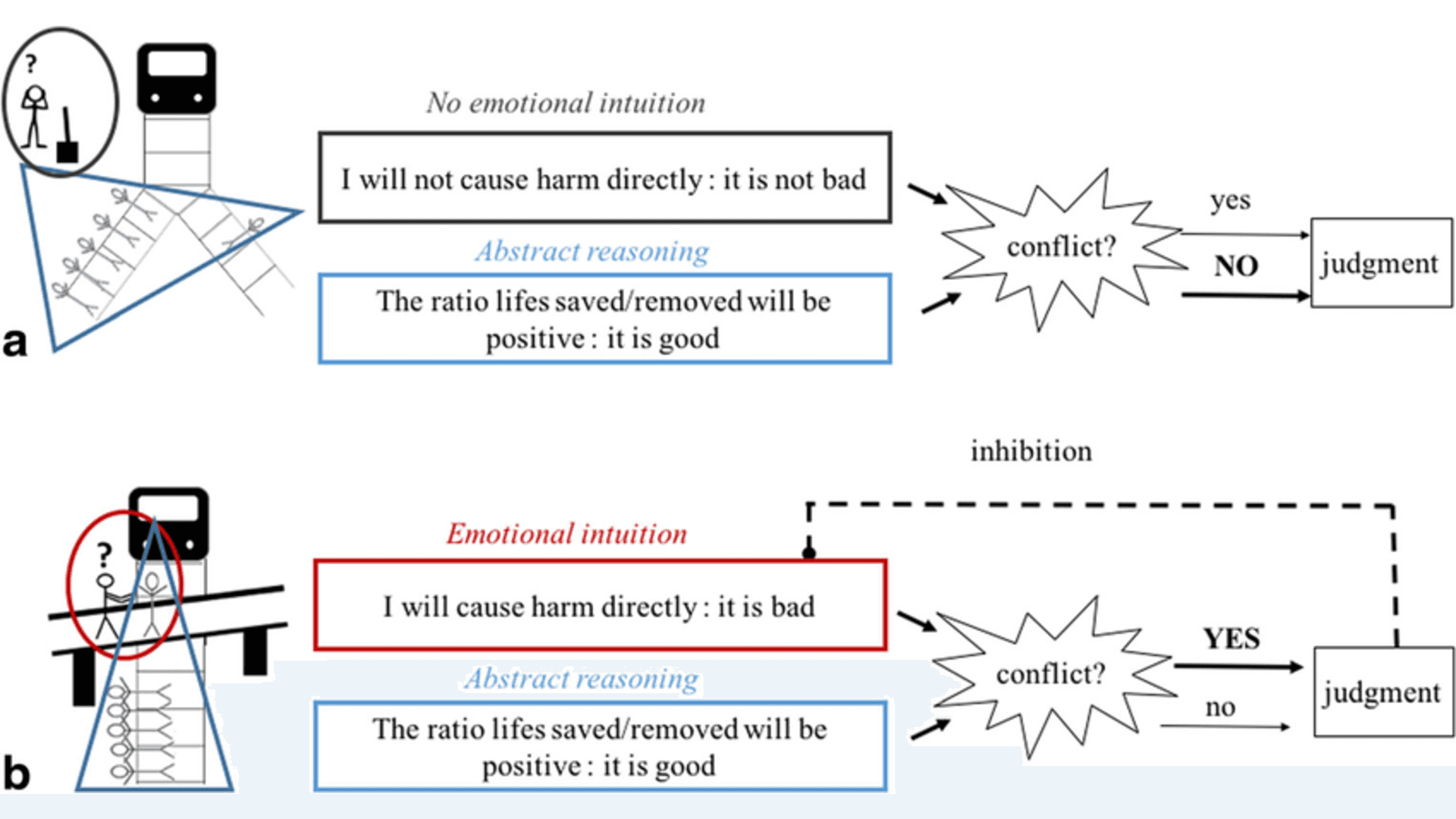
Thinking, Fast and Slow introduces a broad account of intuitive and deliberate judgment. It helps beginners see why economic choices cannot always be modeled as calm, complete calculation. Attention, framing, memory, confidence, and shortcuts affect how people interpret risks and alternatives.
Read this book as a framework to test, not a catalog of labels to apply to other people. For any claimed bias, ask how it was measured, whether the situation resembles the research setting, and whether incentives or experience change the result.
Reading question: What information, framing, or mental shortcut shapes this decision?
3. Nudge by Richard H. Thaler and Cass R. Sunstein
Best for: examining choice architecture and policy design
Nudge moves from observed behavior to the design of defaults, prompts, and decision environments. It gives beginners a vocabulary for asking how forms, enrollment systems, interfaces, and institutional rules steer behavior even when choices remain formally available.
Pair every proposed nudge with questions about transparency, consent, distribution, accountability, and measurement. A design can improve one outcome while making another harder to see. Also compare a nudge with structural alternatives such as changing prices, access, rights, or service quality.
Reading question: Who chose the default, whose objective does it serve, and how can a person opt out?
4. Poor Economics by Abhijit V. Banerjee and Esther Duflo
Best for: learning how specific evidence can challenge broad assumptions about poverty
Poor Economics examines concrete decisions and interventions rather than treating poverty as one undifferentiated problem. It is useful for learning how researchers break large policy questions into testable parts and how local constraints can produce outcomes that look irrational from a distance.
While reading, distinguish the observed result from its proposed explanation. Record the population, setting, time horizon, comparison, and outcome. Evidence from one intervention can be informative without automatically transferring to another country, institution, or period.
Reading question: What constraint is the study actually testing, and where might the result fail to generalize?
5. Why Nations Fail by Daron Acemoglu and James A. Robinson
Best for: comparing institutional explanations of long-run prosperity
Why Nations Fail places political and economic institutions at the center of national development. Beginners can use it to trace how rules, power, participation, and enforcement shape incentives over long periods.
A large historical thesis needs active comparison. Note how the authors define inclusive and extractive institutions, which cases carry the argument, and which alternative explanations—geography, culture, international relations, technology, or historical contingency—need separate consideration.
Reading question: What mechanism links the institution to the claimed outcome, and what rival explanation could fit the same case?
6. The Wealth of Nations by Adam Smith
Best for: reading a foundational argument about specialization and markets
The Wealth of Nations is the oldest and most demanding selection here. Beginners do not need to read it cover to cover first. Use a guided, selective approach: establish the historical context, follow the treatment of specialization and exchange, and track where Smith discusses institutions, public responsibilities, power, and limits—not only the passages most often reduced to slogans.
Because language and economic institutions have changed, maintain a two-column note: Smith’s term or example on one side, your present-day interpretation on the other. Mark uncertainty instead of silently modernizing the claim.
Reading question: Which parts describe a mechanism, and which depend on the institutions of Smith’s period?
7. Capital in the Twenty-First Century by Thomas Piketty
Best for: studying wealth, income, and long-run distribution
Capital in the Twenty-First Century asks how wealth and income are distributed over time and what forces change that distribution. It gives beginners a reason to separate flows such as annual income from stocks such as accumulated wealth, and to examine the historical data behind large claims.
This is a long book, so begin with the research question, definitions, major charts, and methodological notes. Record the countries and periods behind each conclusion. Then compare critiques about data construction, causal interpretation, policy implications, and applicability across different economies.
Reading question: Is this claim descriptive, causal, predictive, or normative—and what evidence supports that level?
8. Doughnut Economics by Kate Raworth
Best for: comparing economic goals beyond growth alone
Doughnut Economics challenges readers to evaluate economic performance through both human needs and ecological constraints. It belongs at the end of this path because it asks you to reconsider the objectives and diagrams that organize earlier economic thinking.
Treat the framework as a set of questions rather than a finished measurement system. Which social outcomes matter? Which environmental limits are relevant? At what geographic scale should they be assessed? Who decides the thresholds, and how should conflicts among objectives be handled?
Reading question: What definition of prosperity is being used, and which costs remain outside it?
Choose a reading track
If you want an accessible introduction
Read The Undercover Economist, then Thinking, Fast and Slow, then Nudge. This route starts with everyday mechanisms and moves into behavior and institutional design.
If you care about development and public policy
Read Poor Economics and Why Nations Fail. Compare the first book’s intervention-level evidence with the second book’s broad institutional history. Ask what each scale can and cannot explain.
If you want foundations and long-run change
Read selected sections of The Wealth of Nations, then Capital in the Twenty-First Century. Keep definitions, historical context, and data scope visible in your notes.
If you want to question conventional goals
Read Doughnut Economics after at least one foundational or empirical title. That makes it easier to identify which assumptions the book retains, revises, or rejects.
A note template for comparing economics books
Use the same fields for every book:
Economics book note

- Book and author:
- Main question:
- Level of analysis: individual / firm / market / institution / nation / global
- Key mechanism:
- Evidence type:
- Important definition:
- Strongest supporting example:
- Scope or limitation:
- Alternative explanation:
- Value judgment or policy objective:
- Connection to another book:
- Claim to verify in a primary source:
The “level of analysis” field prevents accidental leaps. A pattern in individual choice does not automatically explain a national outcome; a historical relationship does not automatically establish a policy effect.
How to read economics books critically
Separate positive and normative claims
A positive claim describes or explains what happens. A normative claim argues what should happen. Real books often combine them. Mark the transition so that evidence for a pattern is not mistaken for agreement about the preferred goal.
Define the counterfactual
When an author says a policy, institution, or event changed an outcome, ask what would probably have happened otherwise. The counterfactual may be explicit, approximated through a comparison, or left unsupported.
Track units, time, and population
Write down whether a figure concerns people, households, firms, countries, prices, percentages, or currency-adjusted values. Note the time period and population. A chart’s shape is not enough to interpret it correctly.
Compare across disagreement
Do not read disagreement as a reason to abandon the subject. Build a claim table with each author’s mechanism, evidence, scope, and preferred objective. Then identify whether the authors disagree about facts, models, definitions, values, or the scale of analysis.
Use Readever’s AI reading assistant to ask passage-specific questions and talk to your books when you need to test your interpretation. AI output can be incomplete or wrong; verify consequential claims against the book and authoritative primary sources.
Frequently asked questions
What economics book should a complete beginner read first?
Start with The Undercover Economist if you want an accessible tour of everyday mechanisms. Start with Poor Economics if your main interest is development evidence, or Thinking, Fast and Slow if you want behavioral foundations.
Do I need to study mathematics before reading these books?
No advanced mathematics is required to begin this list. You should still inspect definitions, charts, units, and comparisons carefully. If a later topic requires formal modeling or statistics, use a dedicated textbook or course rather than pretending a general-interest book supplies that training.
Are these eight books from one school of economics?
No. They differ in method, scale, historical emphasis, and preferred measures of success. That diversity is intentional. The goal is to learn how to compare economic arguments, not to present a single canon as uncontested.
Is this list financial or investment advice?
No. It is an educational reading path. It does not recommend securities, portfolios, trades, or personalized financial actions.
Build your economics reading path
Choose one question you genuinely want to answer, then select the book whose “best for” line matches it. Capture the mechanism, evidence, scope, and alternative explanation before moving to the next title. Browse the full Economics collection, or start reading with Readever and keep your comparisons beside the source.